

The agentic AI curve is compressing - fast.
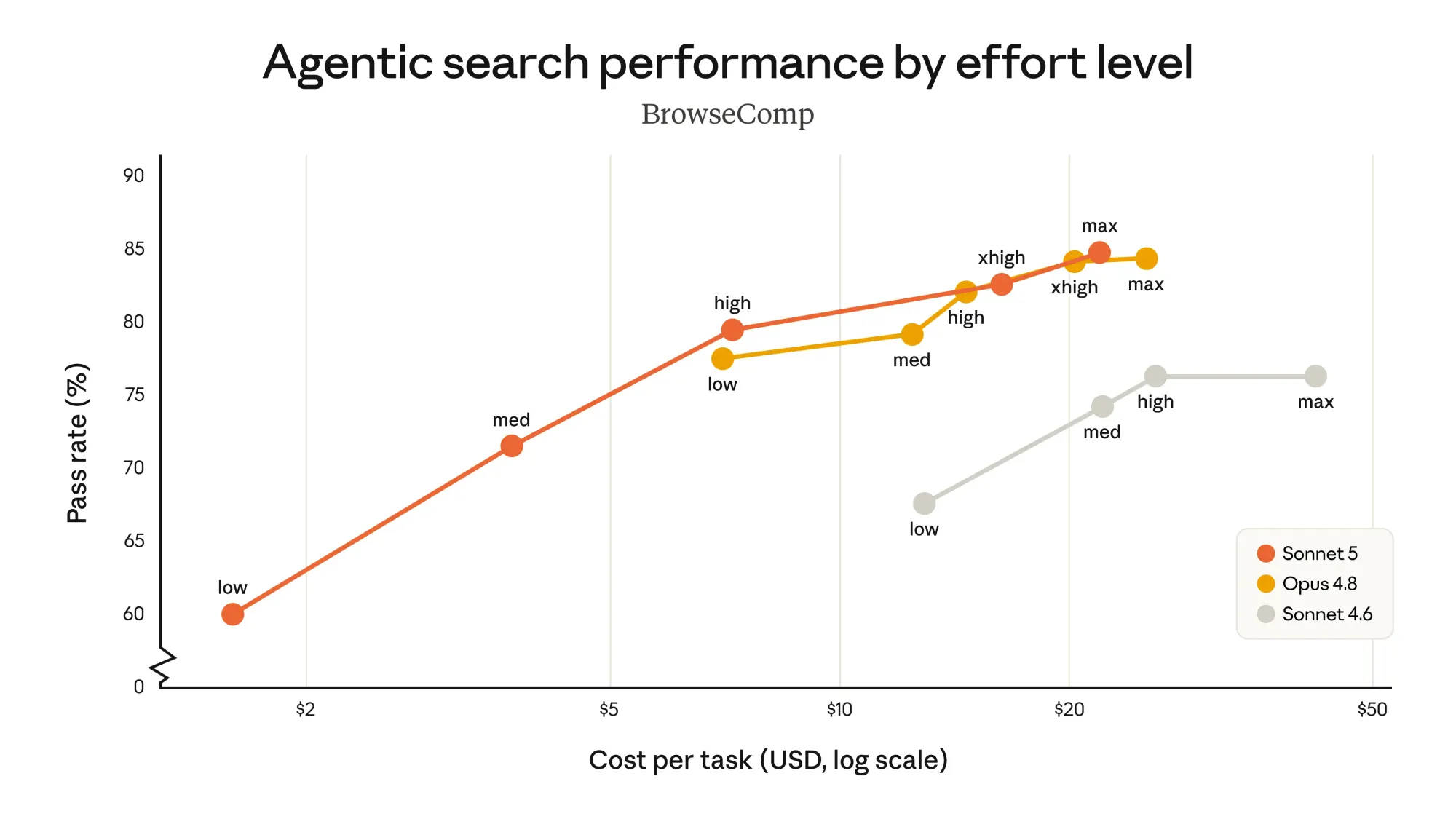
With the release of Claude Sonnet 5, we’re seeing a meaningful shift in where real autonomy becomes economically viable.
But zoom out, and this moment is no longer just about model progress.
It is about power, control, and the early architecture of AI governance.
Because alongside Sonnet 5, we now have the return of Claude Fable 5 - after being pulled offline under U.S. export controls, triggering weeks of negotiation with the White House over its potential cybersecurity risks.
That sequence alone would have been unthinkable a year ago.
Now it is precedent.
On one hand, Sonnet 5 advances the Sonnet line in meaningful ways: stronger reasoning, more reliable tool use, improved coding, and the ability to plan, execute, and self-check autonomously. Capabilities that, until recently, were largely confined to more expensive frontier models are now becoming accessible at a much lower price point.
That truly matters.
Because the constraint on agentic systems has never been just capability - it has been cost-performance at scale.
But there is another side to this release.
Sonnet 5 is better than Sonnet 4.6 - unsurprising. Yet it still trails Opus 4.8 across evaluations. The “5” designation suggests a generational leap that the benchmarks don’t fully support. Pricing remains largely unchanged. Opus is still more expensive - and still better.
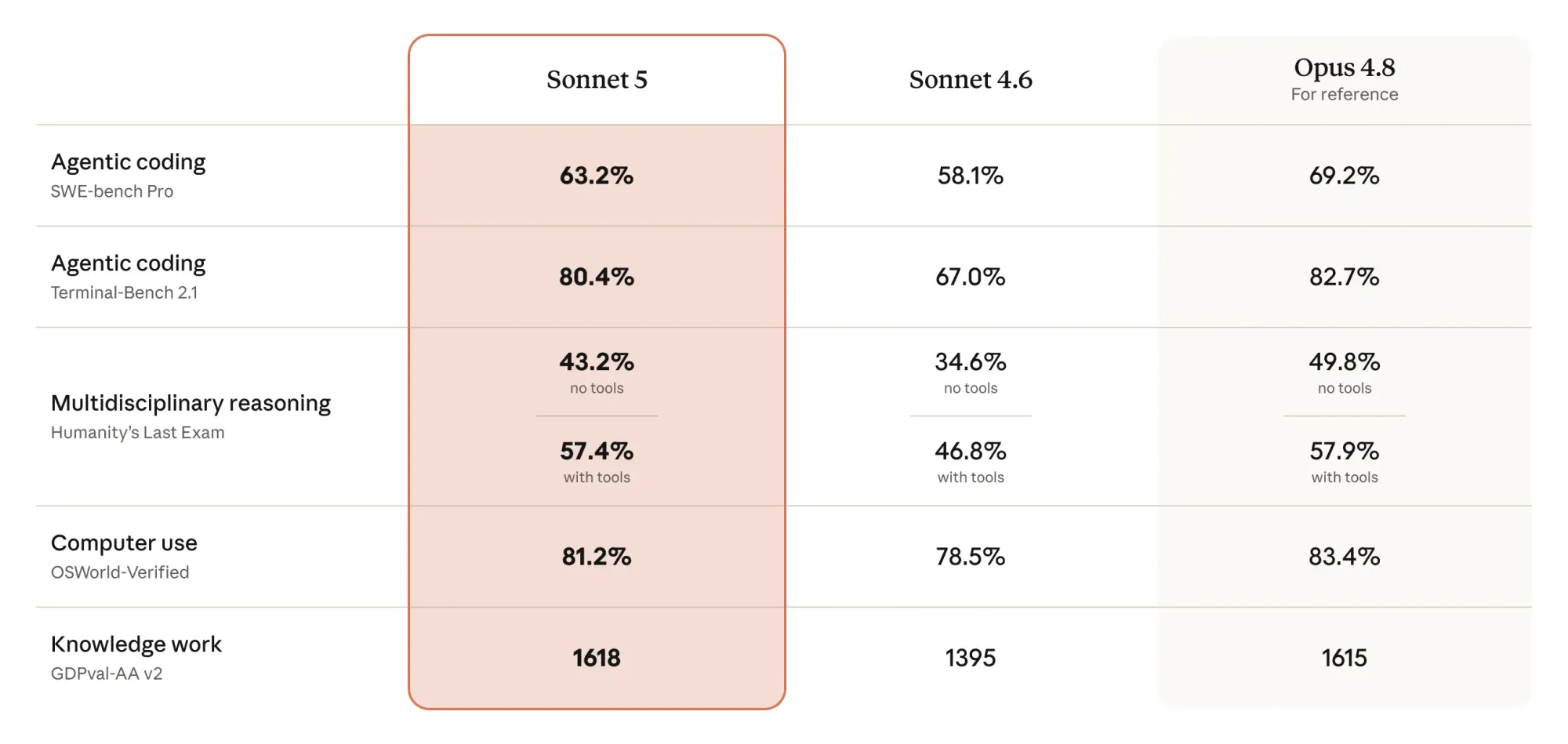
So while Sonnet 5 improves the curve, it doesn’t redefine it.
The result is a release that is directionally important, but strategically ambiguous.
Now layer in what just happened with Fable 5.
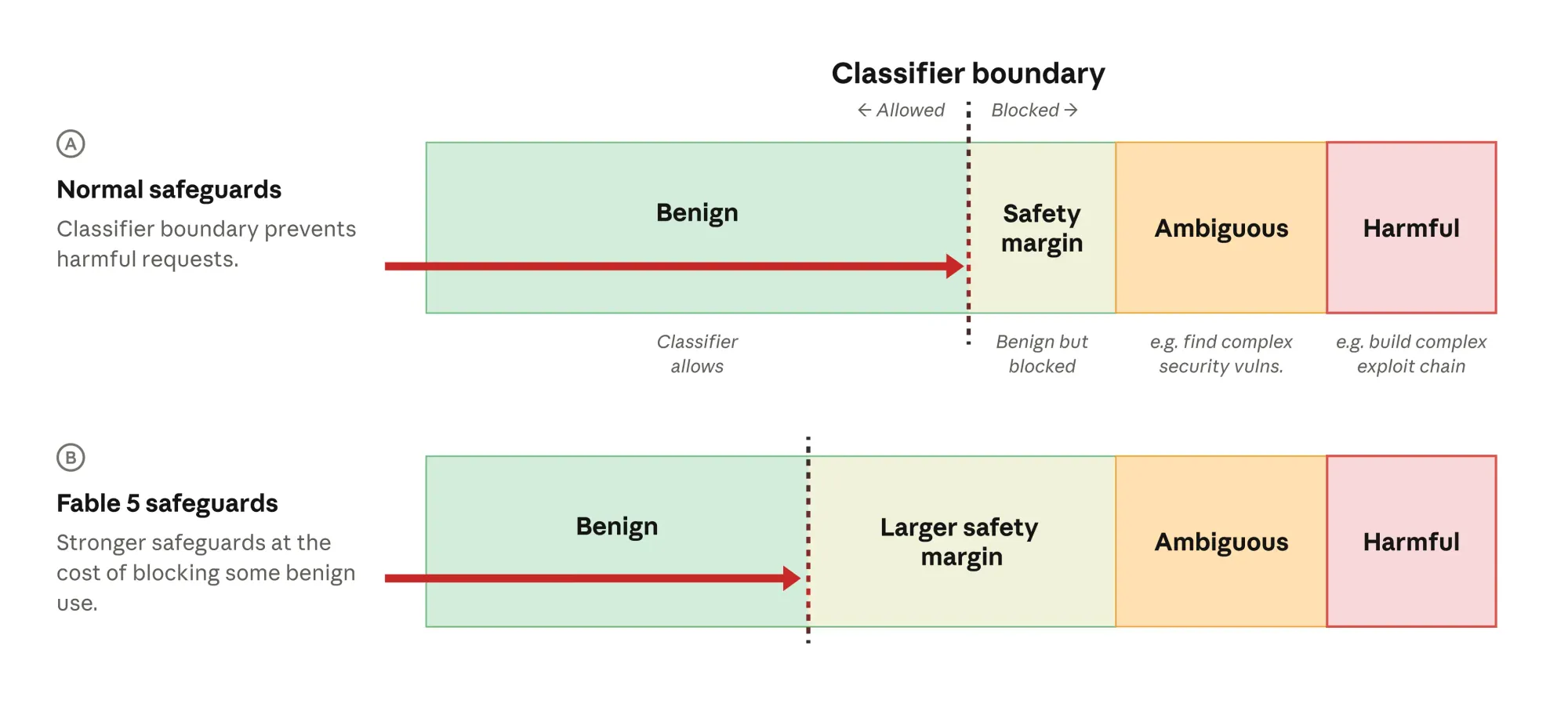
The model was effectively shut down due to national security concerns. Access was restricted globally because there was no reliable way to enforce nationality-based controls in real time. Senior executives were sent to Washington. Negotiations followed. Safeguards were revised. And only then was access restored.
This is not a product lifecycle.
This is a governance lifecycle.
And the reactions from across the ecosystem make clear how unsettled that lifecycle is:
Some see this as a strategic misstep. Restricting leading U.S. models, even temporarily, risks pushing developers and security firms toward non-U.S. alternatives - including Chinese models - potentially weakening the very security posture the controls were meant to protect.
Others see progress - but with opacity. The lack of clarity around what was agreed between Anthropic and the government raises concerns about consistency, predictability, and whether a stable, investable framework can emerge from ad hoc negotiations.
And many recognize what this likely becomes: a new normal.
A world where frontier model releases require case-by-case negotiation with governments. Where risk thresholds are subjective. Where timelines are uncertain. Where “launch” becomes a coordinated event between labs and state actors.
Fable 5’s return reinforces several structural shifts:
- AI export controls are now real - and operational
This is no longer theoretical policy discussion. Frontier models can be restricted, withdrawn, and reinstated based on national security assessments. - Global competitiveness is directly in play
If U.S. models are constrained, demand will not disappear - it will reroute. The competitive implications, particularly with rapidly advancing Chinese models, are immediate. - Safety is becoming programmable infrastructure
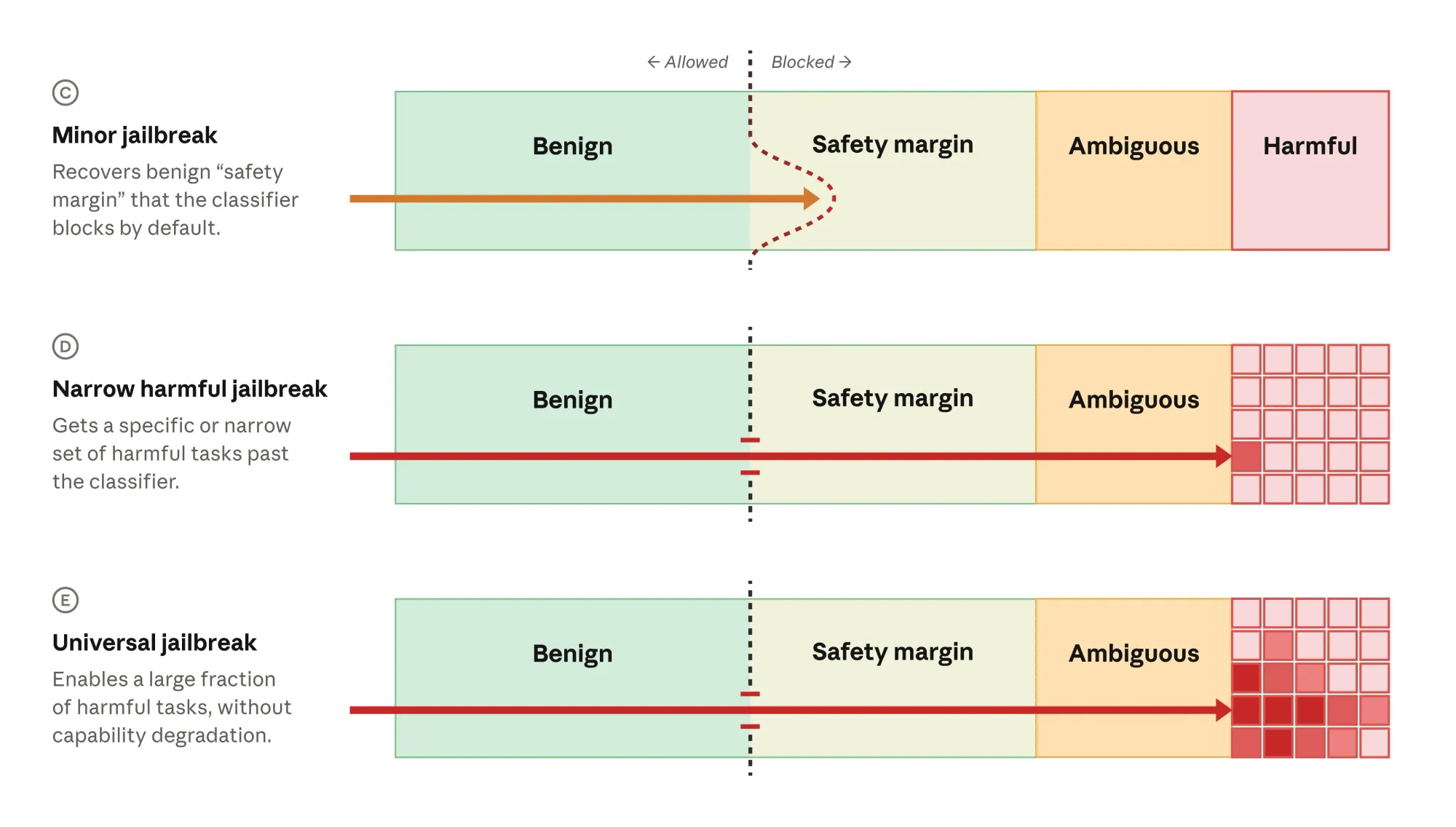
The use of classifiers to dynamically block, reroute, or degrade capabilities (including falling back to weaker models) signals a future where model behavior is continuously governed in production. - Governance is shifting from principle to process
What matters now is not just what safeguards exist, but how decisions are made: who evaluates risk, under what framework, and with what level of transparency. - Standards are being built in real time
The proposed industry framework for evaluating jailbreaks - spanning capability gain, breadth, weaponization ease, and discoverability - may become one of the first shared taxonomies for AI risk severity.
This context fundamentally reframes Sonnet 5.
The absence of Opus 5. The controlled release of Sonnet. The temporary withdrawal and negotiated return of Fable. The limited access to Mythos.
These are not isolated product decisions.
They are signals of a system under constraint.
One plausible interpretation is that we are entering a bifurcated AI landscape:
- Widely deployed, economically viable agentic systems (Sonnet-class)
- Tightly controlled, government-influenced frontier systems (Fable/Mythos-class)
And in between, a growing layer of negotiation, classification, and control.
There is also a deeper truth emerging from the Fable 5 saga:
We are past the point where AI risk is hypothetical.
Advanced models are now widely perceived - even by investors and operators - as having the potential to create real-world harm at the level of national security.
That perception alone changes everything.
It changes how models are released.
How they are governed.
Who gets access.
And how quickly innovation can move.
For boards and executive teams, the takeaway is no longer just about adopting AI.
It is about navigating a system where:
- Capability is accelerating
- Access is conditional
- Governance is negotiated
- And global competition is intensifying
The question is no longer if agentic AI will scale.
It is whether organizations are prepared to operate in a world where AI is not just a technology advantage - but a regulated, contested, and strategically controlled asset.


