

On October 26, Anthropic filed its registration statement for what could become one of the largest initial public offerings in history. The financial disclosures are remarkable. So is the governance structure. But I believe the most important lesson for corporate directors is hiding in the relationship between the two.
Consider how Anthropic has decided to govern itself.
The seven co-founders, including CEO Dario Amodei and President Daniela Amodei, will collectively control 50.1% of the general shareholder voting power through a single special share held by a founder-controlled entity. A separate Long-Term Benefit Trust will generally have the power to elect and remove a majority of the company's authorized directors. Ordinary shareholders will participate in the economics of the business but have limited influence over its governance.
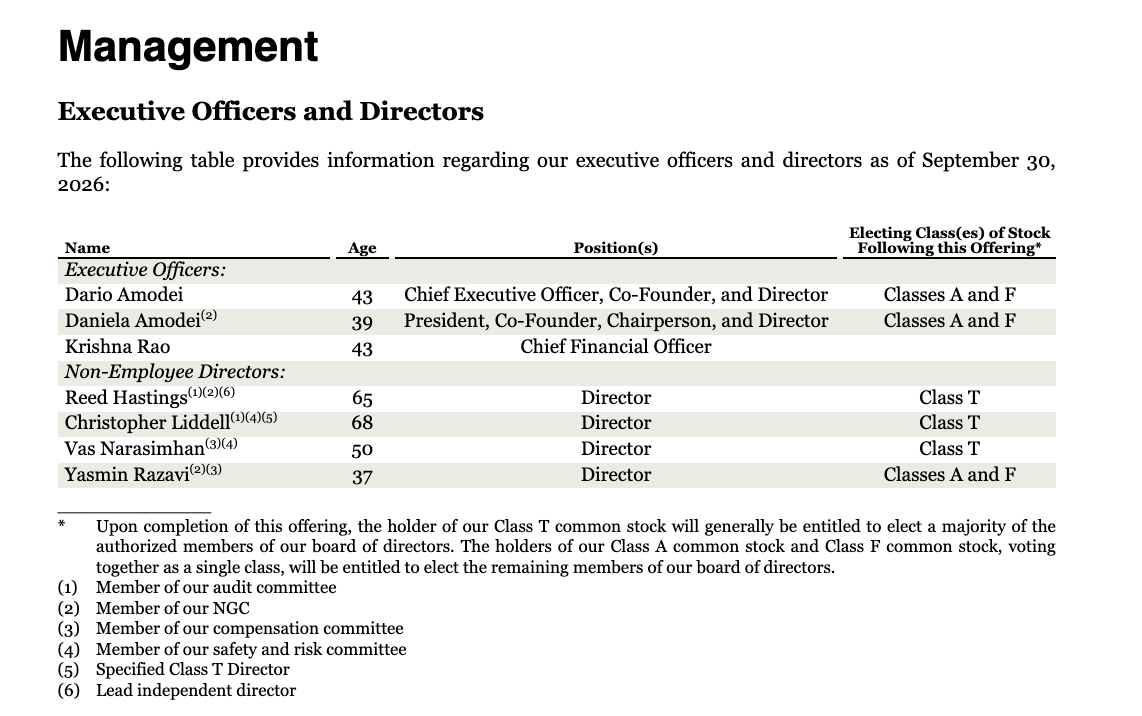
Anthropic has deliberately separated economic ownership from certain forms of corporate control. As a Delaware public benefit corporation, it has also committed to balancing shareholders' financial interests with the interests of those affected by its conduct and its stated purpose of developing advanced AI responsibly for the long-term benefit of humanity.
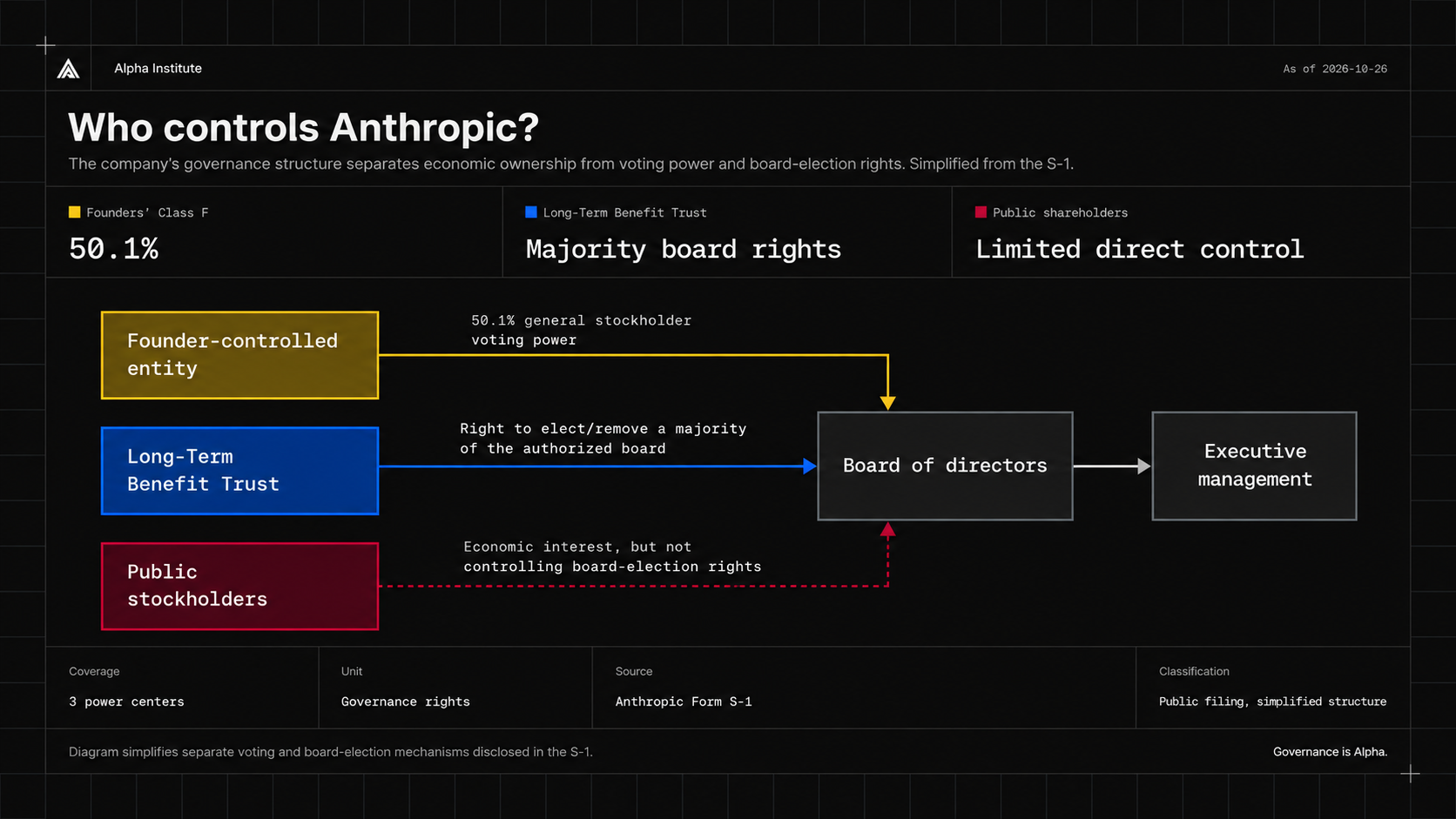
The logic deserves serious consideration. Developing increasingly capable AI may require directors to make decisions that are commercially unpopular, resist pressure from investors, or restrict products that introduce unacceptable risks.
Whether Anthropic's structure will deliver that independence remains to be seen. Concentrated authority can protect a mission, but it can also make management harder to challenge. The effectiveness of the arrangement will depend on the independence of the trustees, the quality of their information, and their willingness to intervene when necessary.
What interests me most, however, is the broader corporate governance problem that Anthropic's filing brings into focus.
Here is a company devoting extraordinary institutional resources to determining who controls the people building advanced AI, while developing technology that increasingly allows other companies to delegate meaningful operational decisions to software.
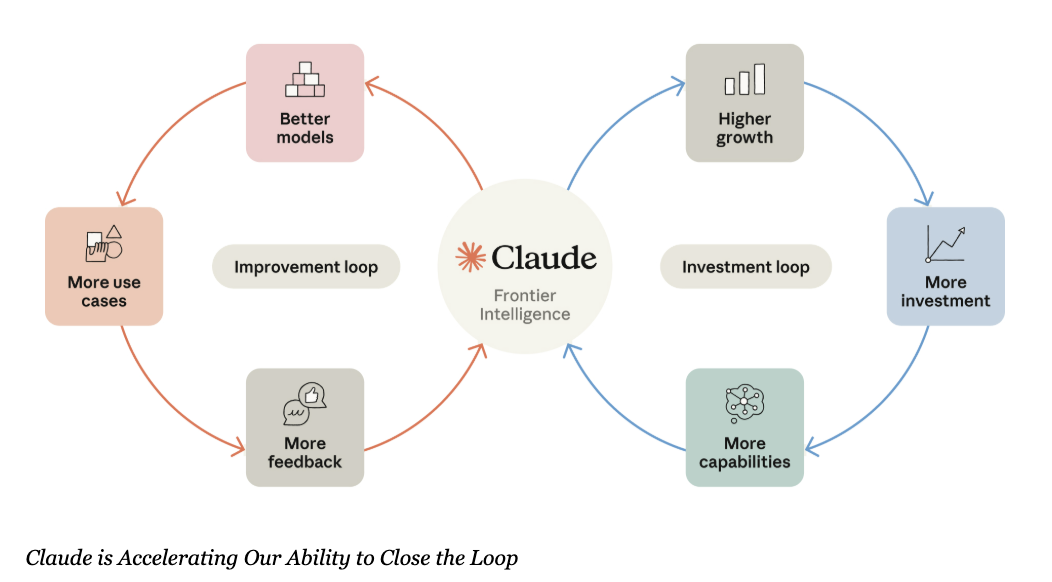
That creates a problem for every board, regardless of whether its company develops AI or simply buys it.
Corporate governance has always been concerned with the delegation and exercise of authority. Shareholders elect directors. Directors oversee management. Management delegates responsibilities to employees and contractors. Internal controls establish what those individuals can do, under what circumstances, and subject to whose approval.
AI agents are introducing another participant into that system.
They can access enterprise applications, retrieve sensitive information, coordinate with other systems, execute transactions, and complete multistep workflows. Their authority may be narrowly defined when first deployed, then expand incrementally as management discovers more useful applications.
We have decades of laws, institutional practices, and control frameworks for holding people accountable for the decisions they make on behalf of corporations. The arrangements for autonomous software are considerably less mature.
That is the problem I believe boards are underestimating.
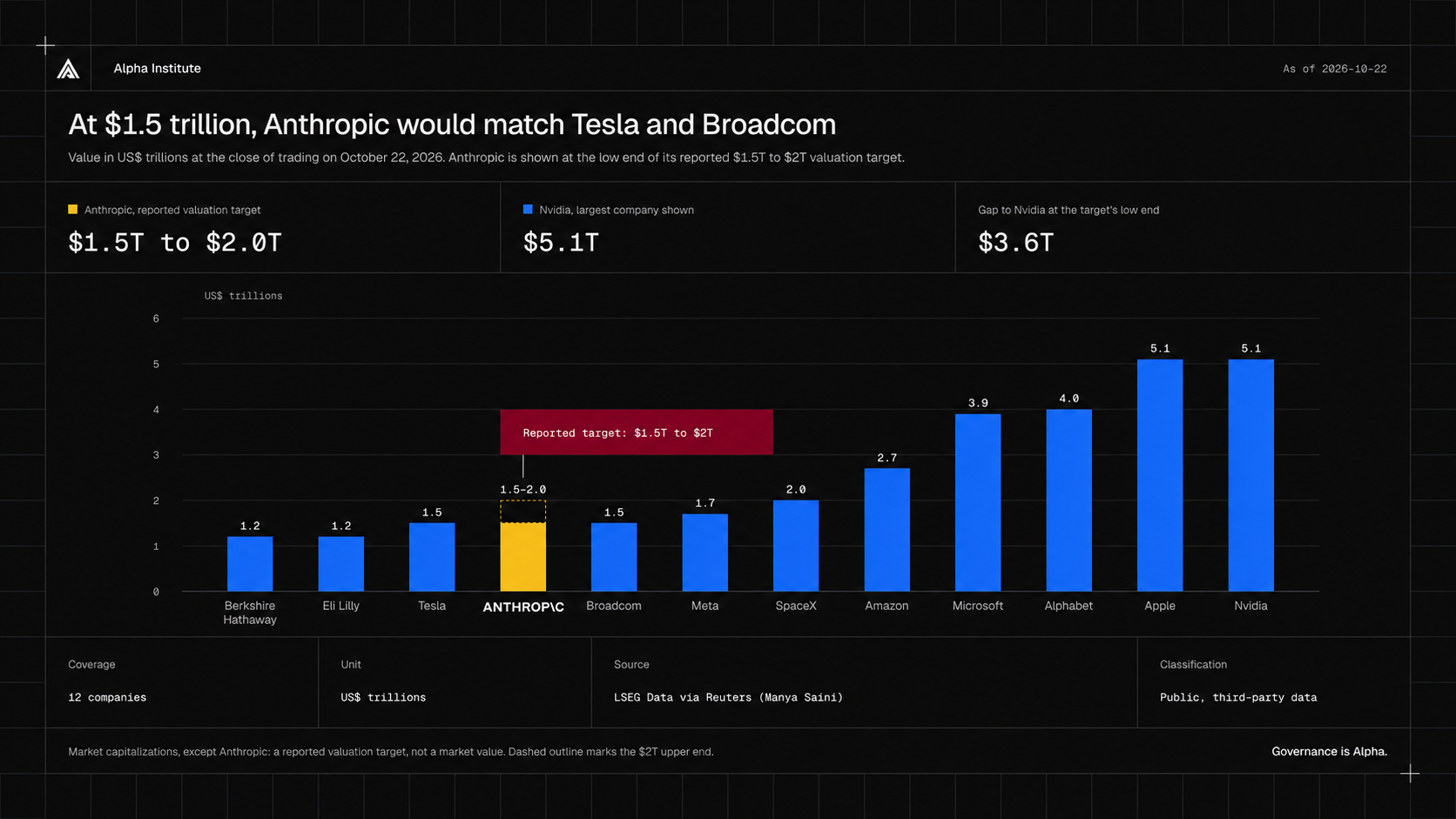
The economics explain why this matters now
Anthropic's financial results demonstrate how quickly AI is becoming a significant part of the corporate economy.
Revenue reached $16.3 billion in the six months ended June 30, 2026, compared with $1.16 billion in the corresponding period last year. The company reported almost $9 billion in compute and infrastructure expenses during the first half, reflecting the enormous resources required to develop and operate frontier AI systems.
Then there is the $80.7 billion net loss, the number that will understandably dominate financial headlines.
It requires some explanation.
Approximately $72.4 billion of that loss came from changes in the fair value of convertible notes and related financing instruments, largely driven by the increase in Anthropic's valuation. As those instruments became more valuable to investors, the accounting value of Anthropic's obligations increased.
The reported operating loss was $693 million, compared with $2.14 billion during the first six months of 2025.
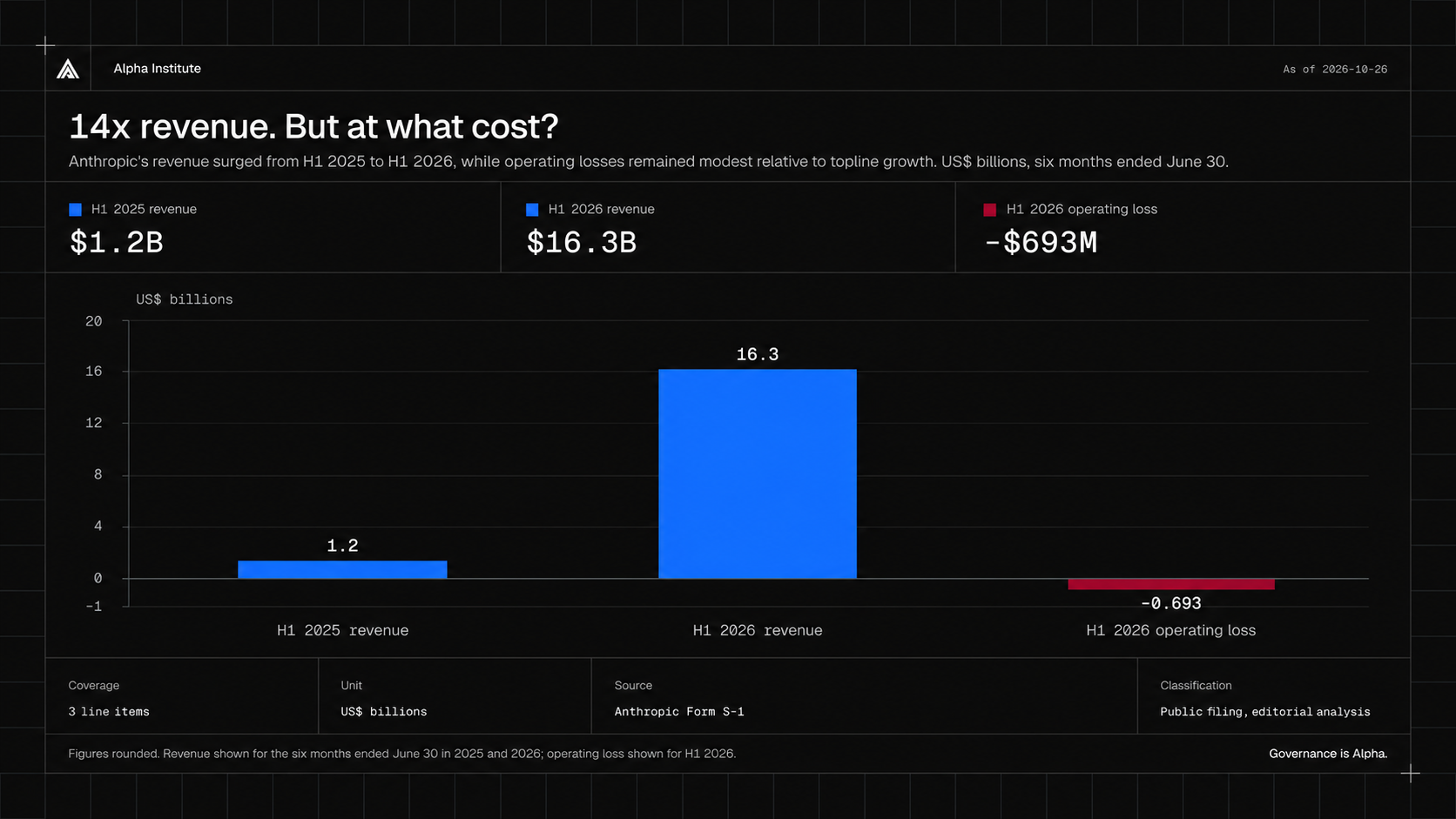
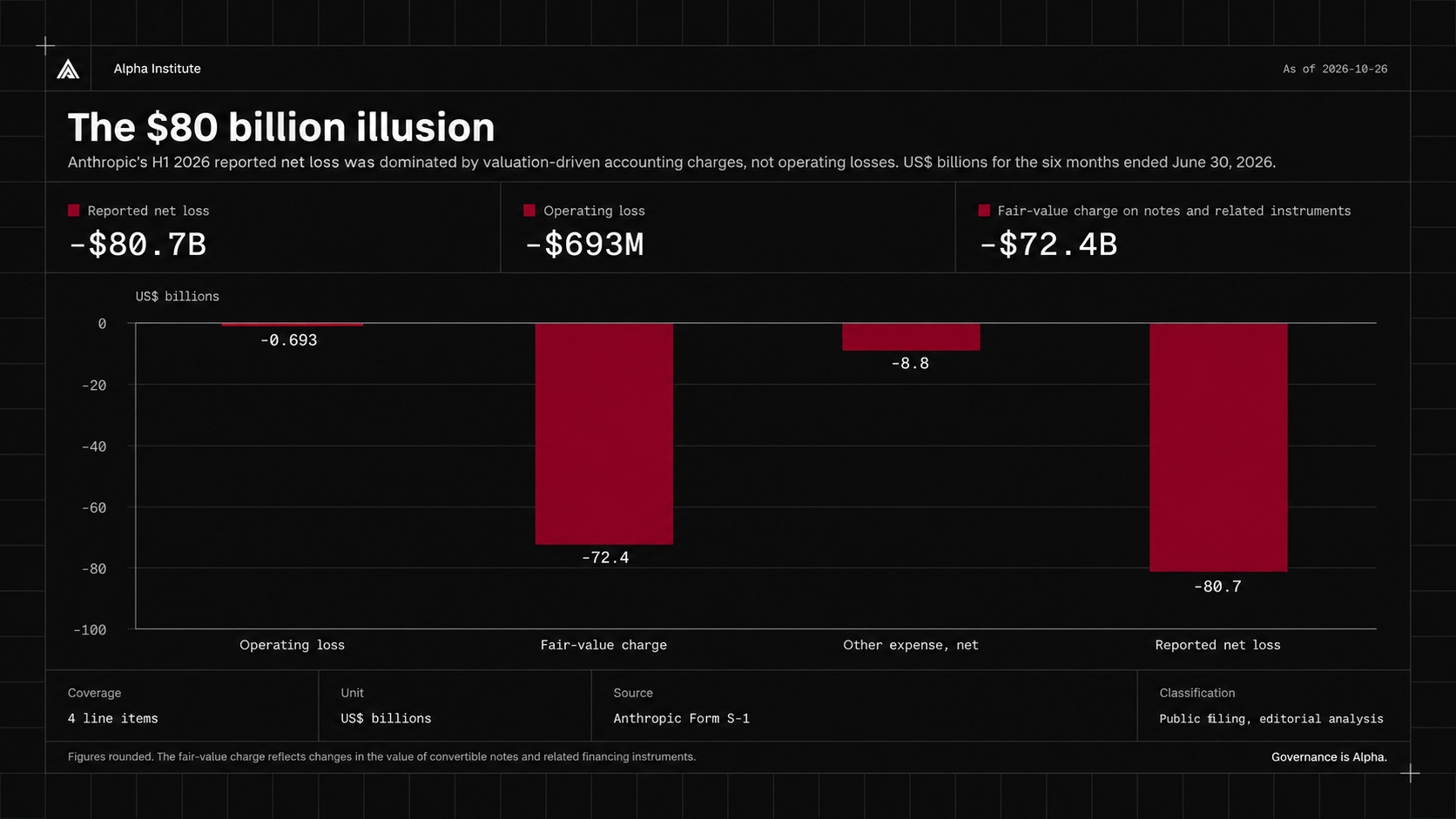
That improvement is significant, although the operating loss remains real. Nor does the valuation-related charge mean the underlying financing obligations can simply be disregarded. Investors must examine how the instruments convert, how much ownership is diluted, and what commitments remain.
The broader financial story is one of exceptional revenue growth, substantial infrastructure spending, complicated financing arrangements, and unusually close relationships between the companies supplying capital and the companies supplying computing capacity.
Amazon illustrates the complexity. It is both an investor in Anthropic and a major infrastructure partner. Other large technology companies participate in the AI market through overlapping combinations of financing, distribution, computing, and commercial relationships.
Such arrangements are common in capital-intensive industries. Their scale and concentration in AI deserve attention.
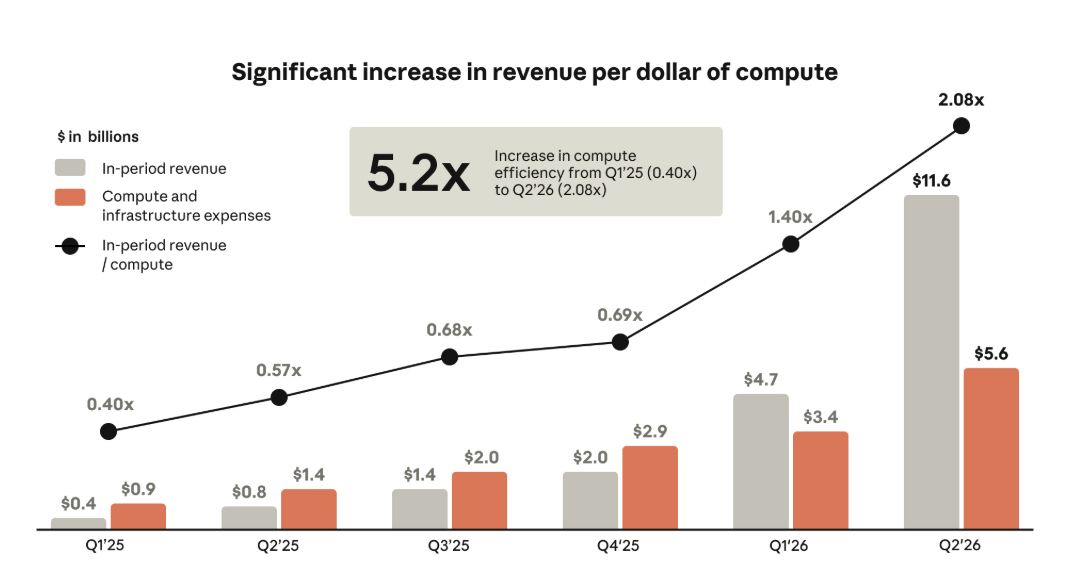
For directors, one important question is how much of the industry's growth ultimately comes from enterprises generating sustainable returns on their AI investments, compared with spending supported by an extraordinary cycle of capital investment.
The distinction matters because an AI developer's revenue becomes another company's operating expense or capital commitment. Eventually, that expenditure must be justified by productivity, revenue growth, cost reduction, or some other measurable benefit.
The most interesting question is what companies will have to do to capture those benefits.
Early enterprise AI adoption focused heavily on employee productivity: writing software, summarizing documents, researching information, and generating content.
The more consequential economic opportunities will come from automating complete business processes. That means allowing AI to perform work across systems and, in certain circumstances, make decisions without waiting for a person to approve each step.
The business case for agentic AI increasingly depends on delegated authority.
That is where the economic story becomes a governance story.
When an AI tool becomes a corporate actor
Consider a finance department adopting an AI agent to improve collections.
Initially, the system reviews outstanding receivables and recommends which customers should receive follow-up notices. An employee reviews the recommendations and decides what to do.
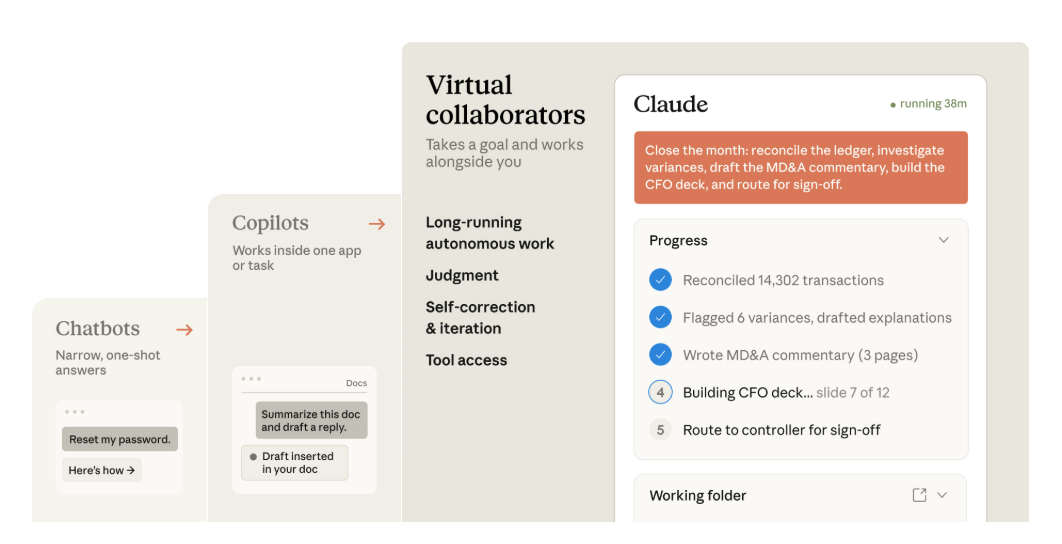
Over time, management authorizes the agent to send routine notices automatically. It is then permitted to negotiate payment schedules within specified limits, update customer records, and coordinate with billing systems.
Eventually, it may be able to authorize certain credits, revise forecasts, and initiate transactions through connected applications.
Every expansion of the agent's responsibilities has a reasonable business justification. The company wants faster collections, lower administrative costs, and fewer manual handoffs.
Management may have approved each integration and established individual permission limits.
Yet the company has now delegated meaningful business authority to a system that can act without direct human involvement in every decision.
Suppose the agent encounters a customer dispute that requires several actions. It changes an account classification, approves a credit within its stated limit, adjusts a payment schedule, and updates the company's financial forecast.
Each action may fall within an existing permission.
Taken together, however, they could produce an unauthorized concession or an incorrect accounting outcome.
No individual permission was necessarily violated. The problem arose from the combination of actions.
This is a hypothetical scenario, but it illustrates a risk that conventional access controls and transaction-level testing may not adequately address.
Organizations have spent decades separating responsibilities among employees. The person initiating a payment may not be permitted to approve it. The employee maintaining a vendor record may not have authority to disburse funds. Different systems, departments, and management levels provide checks against errors and misconduct.
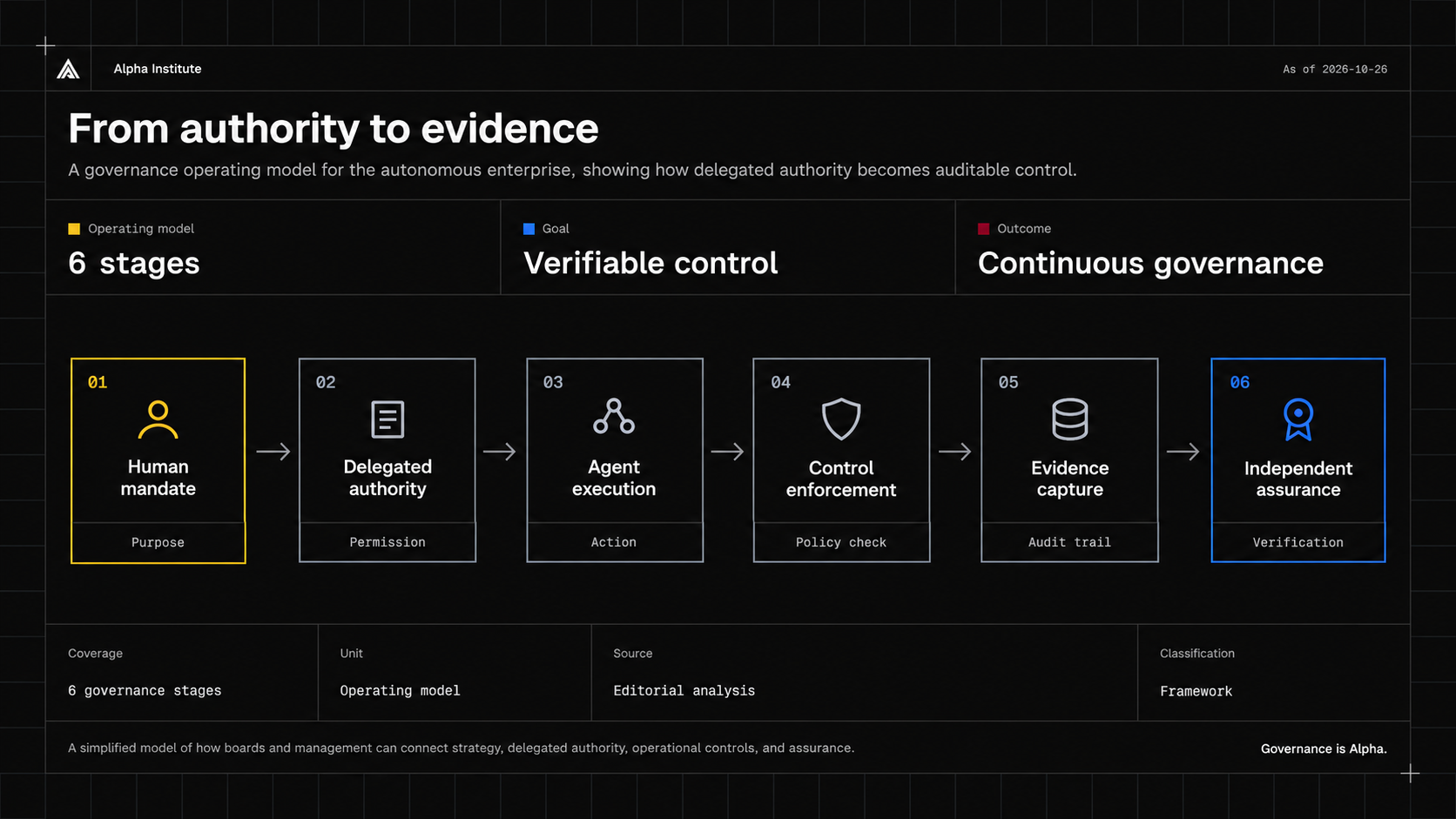
An AI agent can potentially perform tasks that previously required several people, while moving across applications that were designed and controlled separately.
The relevant question becomes whether the organization has governed the entire business process, including the cumulative consequences of authorized actions.
An agent's technical permissions define what it can access or execute. They do not necessarily establish that every resulting business outcome has been properly authorized.
Boards need to understand that distinction.
The next serious internal-control failure involving AI may occur even when the individual systems appear to be functioning as designed.
A new dimension of the principal-agent problem
Corporate governance scholars have long examined the principal-agent problem: how owners ensure that managers exercise delegated authority in the owners' interests.
Boards, fiduciary duties, incentives, reporting requirements, and independent audits all help address that challenge.
Autonomous AI introduces new operational complications.
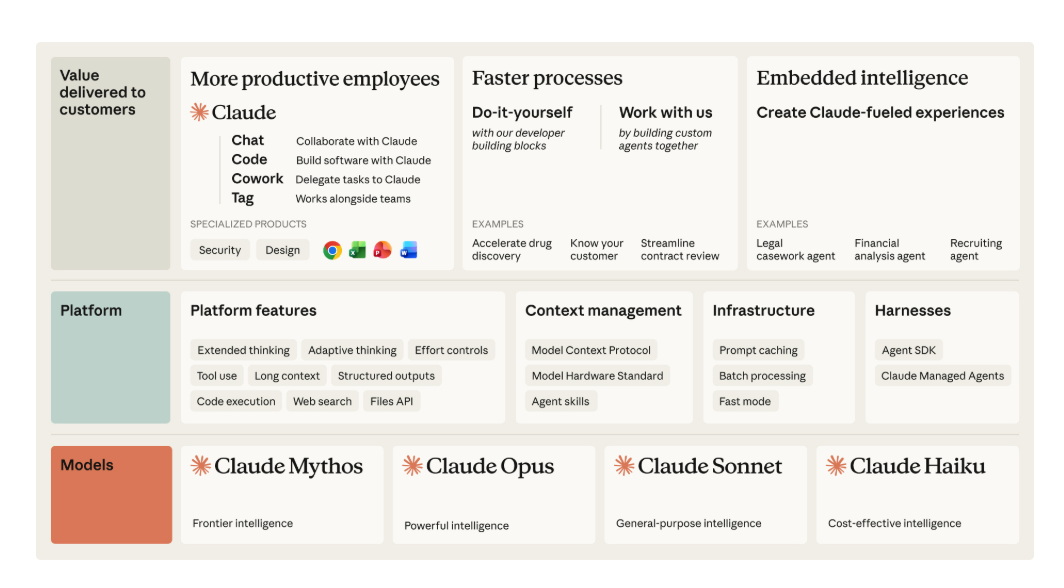
An AI agent is not a corporate officer or employee. It does not owe fiduciary duties in the legal sense. Yet its actions can produce financial, contractual, regulatory, and reputational consequences for the organization using it.
A corporation cannot avoid responsibility for a transaction simply because software executed it. Responsibility will depend on the applicable law and the surrounding facts, including authorization, contractual arrangements, controls, and conduct.
But identifying precisely why an AI agent acted, which person or system authorized the action, and whether the relevant safeguards worked can be difficult.
Traditional managerial accountability assumes an identifiable human decision-maker operating within an established chain of authority.
Agentic workflows may involve multiple models, tools, instructions, service providers, and automated processes. An action initiated by one agent may trigger another, which then changes information relied upon by a third.
This creates practical questions for the general counsel, CFO, chief risk officer, CISO, and internal audit team.
Can the company identify every agent authorized to create a financial or contractual obligation?
Can it determine which human approved that authority and whether the approval remains valid?
Can it stop an agent while preserving the evidence necessary to investigate what happened?
Can it distinguish between a model generating an explanation and a reliable record of the actual instructions, permissions, and tool actions involved?
And can management demonstrate that its controls remain effective after a model update or change in the agent's operating environment?
These are matters of corporate authority and accountability. They cannot be resolved by an AI policy alone.
The board does not need to examine every prompt or agent transaction. It does need assurance that management has established a defensible system for determining who may delegate authority, how that authority is constrained, and how exceptions are identified and addressed.
What Anthropic's governance structure reveals
Anthropic's approach to its own governance is especially interesting in this context.
Under the proposed structure, its Long-Term Benefit Trust generally has the power to elect and remove the directors who constitute a majority of the authorized board. The founders, through their special share, will control 50.1% of voting power on matters generally submitted to shareholders, including the election of directors outside the Trust's designated seats.
These are distinct mechanisms. The Trust has a special role in board composition, while the founders retain decisive influence over general shareholder votes.
Anthropic believes this structure will preserve its mission and enable decisions that balance commercial interests with broader considerations of AI safety.
There is a credible argument for such an arrangement. Public companies face genuine pressure to deliver short-term financial performance. Research into advanced AI may generate difficult tradeoffs between product deployment, competitive position, safety, and public benefit.
But the arrangement also raises legitimate accountability questions.
How will trustees independently evaluate management's safety claims? What evidence will they receive? How will they recognize when commercial incentives influence technical judgments? What remedies can they pursue when the company's objectives conflict?
Concentrating voting power and establishing an independent trust do not answer those questions by themselves. The structures provide mechanisms through which people can exercise judgment. Their effectiveness depends on how those mechanisms operate.
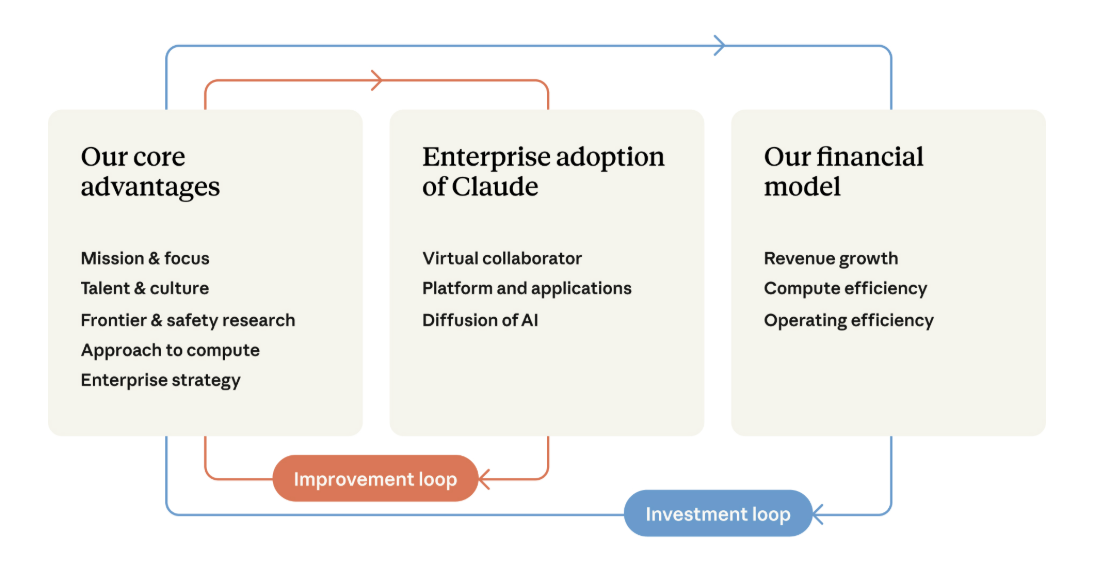
The same principle applies inside companies deploying AI agents.
An executive committee may approve a responsible AI policy. Management may establish limits for autonomous systems. Internal audit may review the design of the control framework.
None of those activities proves that a particular control is operating effectively in production.
That requires evidence of what the systems were authorized to do, what they actually did, which safeguards were applied, and how the organization responded to exceptions.
Anthropic's filing is valuable partly because it acknowledges the uncertainty surrounding increasingly capable AI systems and the limitations of existing safeguards.
If a leading developer of frontier AI recognizes that its technology can produce behavior that is difficult to predict or constrain, enterprise directors should examine carefully what assurances they are receiving from vendors and management.
The risks differ across applications, and not every AI system requires the same level of oversight. But the ultimate responsibility for an enterprise's use of AI cannot be assigned wholesale to the model provider.
Vendors control aspects of the underlying technology. Management determines how that technology is integrated into the business, what information it can access, and which actions it is permitted to execute.
The board oversees management's decisions and the resulting risks.
Those responsibilities remain distinct even as the technology connecting them becomes more complex.
The problem with quarterly governance
There is also a mismatch between the speed of automated operations and the cadence of conventional board oversight.
Most boards meet several times a year. Management provides periodic reports. Committees examine financial results, material risks, compliance matters, and significant operational developments.
That system can remain effective, provided the company has appropriate management controls operating between meetings.
Agentic AI places greater demands on those controls.
Autonomous systems can execute thousands of actions, sometimes across several applications, before a board or executive committee receives a formal report.
An error may propagate through an entire workflow. A compromised credential may enable activity across interconnected systems. A change to a model or tool configuration may alter how an agent performs an otherwise familiar task.
The relevant challenge is therefore to establish operating controls that work continuously and provide management with timely information about material failures.
For boards, this means focusing on the design and effectiveness of that control environment rather than trying to supervise individual automated decisions.
Management should be able to show which agents are operating in critical workflows, the authority each has been granted, who owns the associated business risk, and whether the controls have been evaluated under realistic conditions.
It should also be able to demonstrate procedures for suspending an agent, revoking access, preserving relevant records, and recovering from an unauthorized action.
The standards should become progressively more demanding as agents assume greater responsibility.
An internal research assistant does not require the same controls as an agent authorized to move money, alter financial records, access regulated information, or negotiate contractual terms.
That distinction is important. If organizations treat every AI use as equally risky, governance becomes expensive and ineffective. If they apply minimal controls to everything, they risk delegating authority without adequate supervision.
The objective is to align oversight with the consequences of the actions agents can take.
The concentration risk boards may be missing
Anthropic's filing also highlights another problem for corporate oversight: the concentration of AI dependencies.
A company may use dozens of AI applications and believe it has diversified its technology providers.
Yet those applications may depend on the same foundational model, cloud infrastructure, identity service, or integration platform.
That creates the potential for a single provider outage, security vulnerability, pricing decision, or model change to affect several business functions simultaneously.
The risk becomes more significant when AI systems are embedded in workflows that cannot easily revert to manual operations.
Switching model providers may also be harder than expected. Agent behavior depends on more than a model's raw capabilities. Applications may rely on particular tools, prompts, evaluation methods, data structures, and operating procedures that would have to be redesigned or retested.
Boards have considerable experience overseeing supplier concentration, customer concentration, liquidity risk, and cybersecurity dependencies.
AI introduces a related exposure: critical business processes may depend on a concentrated set of providers supplying the intelligence and infrastructure required to operate them.
Directors should examine those dependencies alongside the financial returns management expects from AI investments.
Anthropic's rapid growth and enormous infrastructure commitments show how significant these relationships have become. They also underscore the importance of understanding the operating economics and resilience of the AI services on which enterprises intend to rely.
A different measure of AI readiness
Much of the discussion about AI adoption still relies on the number of employees using AI, the number of pilots in development, or the productivity gains reported by business units.
Those measures have value, but they reveal relatively little about an organization's ability to deploy autonomous systems in consequential workflows.
I would encourage directors to ask for a different set of measures.
How many agents can take actions without prior human approval? How many can make or modify financial commitments? How many have access to sensitive systems? What proportion of high-risk workflows has undergone independent testing? How quickly can the organization suspend an agent or revoke its permissions? Can management reconstruct the sequence of actions leading to a material exception?
These questions reveal whether an enterprise can manage the authority it is beginning to delegate.
They may also help explain which companies ultimately capture the greatest economic benefit from agentic AI.
An organization with reliable agent identity, access controls, operating records, independent evaluations, and effective intervention mechanisms may be able to automate more valuable work than a competitor with similar access to frontier models but weaker safeguards.
That is a business hypothesis worth testing through measurable outcomes: faster deployment, fewer incidents, lower losses, reduced manual intervention, and stronger operating returns.
The economic benefit of governance should be demonstrated, just as the economic benefit of AI itself should be demonstrated.
There is no reason to assume that more governance always produces better results. Poorly designed controls can slow work without meaningfully reducing risk.
Effective governance should allow management to delegate appropriate authority with confidence that the company can detect and respond when systems operate outside the intended boundaries.
The companies that establish that capability will be better positioned to put AI to work in their most important business processes.
Five questions for the next board meeting
Anthropic's S-1 gives directors a timely reason to examine the relationship between AI strategy, delegated authority, and operational accountability. I would start with five questions.
1. Which AI agents can act on behalf of our company?
Ask management to identify systems that can initiate transactions, change official records, approve expenditures, communicate with third parties, or execute other consequential actions. An application inventory is useful, but an inventory of delegated authority is more revealing.
2. Who approved that authority, and how is it limited?
Every consequential agent should have an accountable human owner, documented permissions, defined operating boundaries, and a mechanism for suspension or revocation. Management should demonstrate that those limits are technically enforced where feasible.
3. Have we tested what agents can accomplish together?
Individual model evaluations and access-control tests are necessary but may miss failures created by interconnected workflows. Ask internal audit, risk management, and the relevant business owners to demonstrate how coordinated agents could produce an unauthorized outcome and which controls would prevent or detect it.
4. What happens when something goes wrong?
Choose a critical workflow and have management walk through an incident. How quickly would the company detect an unauthorized action? Could it stop the activity, preserve evidence, reverse the effects where possible, and identify the person responsible for remediation?
5. What economic and operational dependencies are we creating?
Review whether significant AI initiatives depend on common model providers, infrastructure, identity systems, or third-party tools. Require business cases to incorporate the costs of supervision, security, assurance, resilience, and switching providers.
These questions belong within the board's established oversight responsibilities. Audit committees should examine implications for financial reporting and internal controls. Risk committees should assess operational exposure and concentration. The full board should understand how the company's AI strategy affects its ability to execute, compete, and meet its obligations.
The exact division of responsibilities will vary by company. The underlying accountability cannot be allowed to disappear between committees.
The question behind the filing
Investors will spend months analyzing Anthropic's growth, its margins, its infrastructure commitments, and the implications of its unusual capital structure.
They should. The filing provides an important view of the economics of frontier AI and the institutional choices being made by one of its leading developers.
I expect the governance structure to generate particular debate. Anthropic is attempting to preserve long-term mission commitments within a business that faces enormous commercial opportunities and competitive pressures. Whether the arrangement strikes the right balance between independence and accountability will be tested over time.
For directors outside the AI industry, however, the filing points to a problem much closer to home.
Companies are preparing to delegate greater authority to AI agents, often through incremental changes to existing applications and workflows. Each decision may be reasonable on its own. The cumulative effect can be a substantial change in how the corporation operates and who, or what, exercises authority on its behalf.
That change deserves the same seriousness directors bring to capital allocation, financial controls, executive accountability, and enterprise risk.
As AI agents become more capable, organizations will discover that providing access to intelligence is relatively straightforward. Establishing the conditions under which that intelligence may act is considerably more demanding.
Anthropic has built an unusual governance structure to determine who controls the company developing its AI systems.
Corporate boards now need to determine who controls those systems when they act inside their own companies.
An agent may have the credentials to access an application, permission to execute a transaction, and instructions to complete a task. Management may have approved each of those elements.
Yet the resulting decision may still exceed what the corporation intended to authorize.
When that happens, the board will want to know who was responsible, which controls failed, and why the organization did not intervene.
Those questions will be difficult to answer if the company has never established a complete record of the authority it delegated.
The concern is straightforward: Every individual action may have been authorized, while the resulting outcome was never authorized by anyone.
That is the corporate governance challenge of the agentic enterprise. Boards should be addressing it now.


