

This Thanksgiving, I find myself reflecting on two extraordinary days earlier this month in New York City and, above all, the people who made them possible.
On November 5 and 6, we convened the Alpha Agentic Economy Summit at Nasdaq MarketSite, bringing together corporate directors, CEOs, executives, entrepreneurs, investors, technologists and governance leaders to explore one of the most consequential economic transformations of our lifetime.
We came together not simply to talk about artificial intelligence, but to understand what happens when intelligence becomes increasingly abundant, accessible and autonomous and what that means for how we lead, build, invest, work and govern.
The more authority we give AI, the more leadership we need from the people accountable for it.
Our ambition was to bring the people building the agentic economy together with the people responsible for governing it. To bridge the gap between Silicon Valley and the boardroom, between technological possibility and enterprise reality, and between innovation and accountability.
What follows are my reflections on the questions, opportunities and lessons inspired by our time together.
Ringing the Nasdaq Closing Bell: A Milestone for Alpha and AI Governance
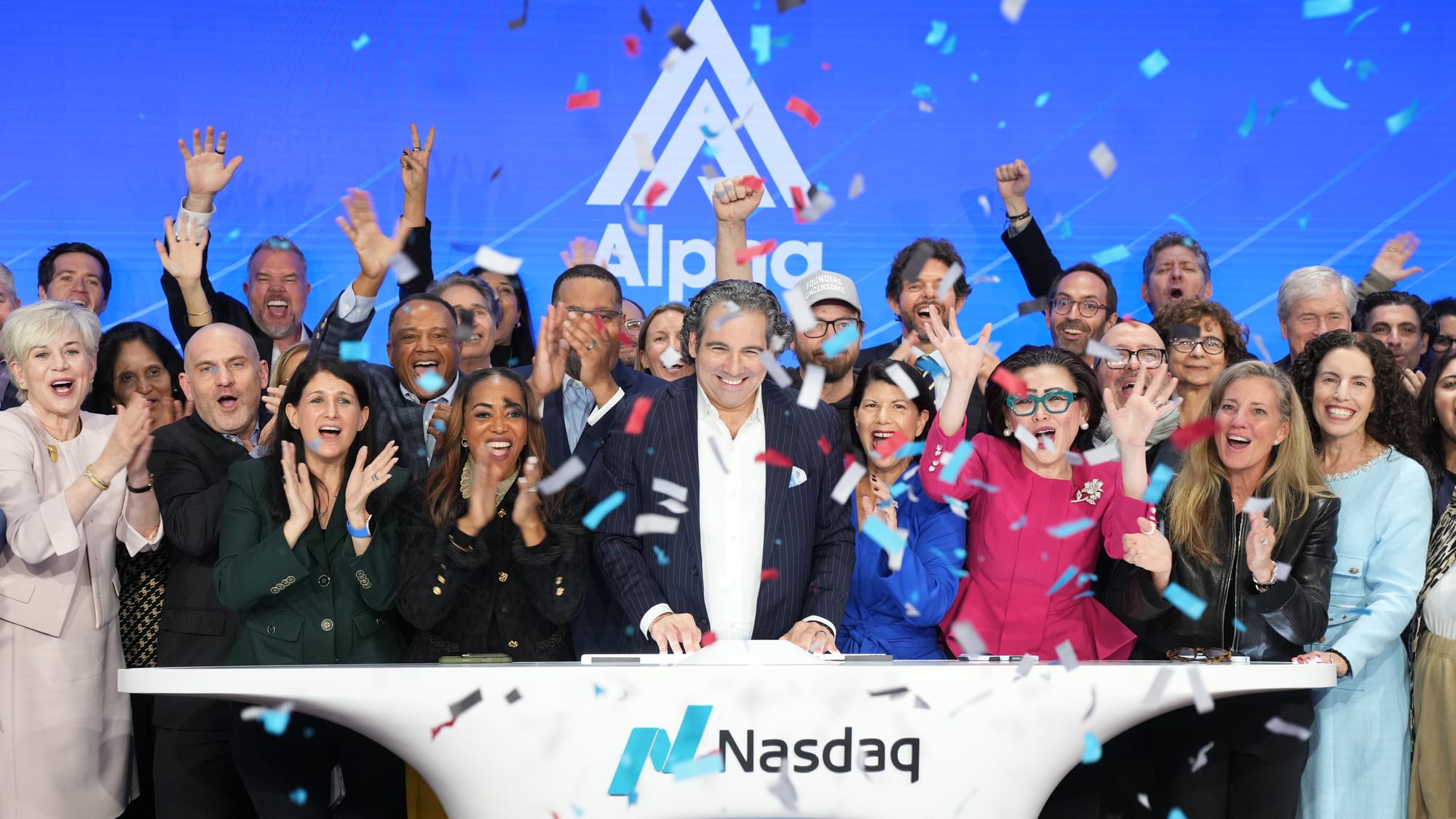
Our two days began with the honor of ringing the Nasdaq Closing Bell in Times Square.
For Alpha, this was more than a celebration of our company's journey. It was a recognition of the growing importance of AI governance and the extraordinary network of leaders committed to advancing it.
Standing alongside our Alpha Council members, partners, friends and colleagues was a powerful reminder that no meaningful institution is built alone.
We are deeply grateful to Nasdaq, Byron Loflin, Laura Altman and the entire Nasdaq Center for Board Excellence and MarketSite teams for their partnership and hospitality.
The Alpha Council Reception: Preparing for an Agentic World
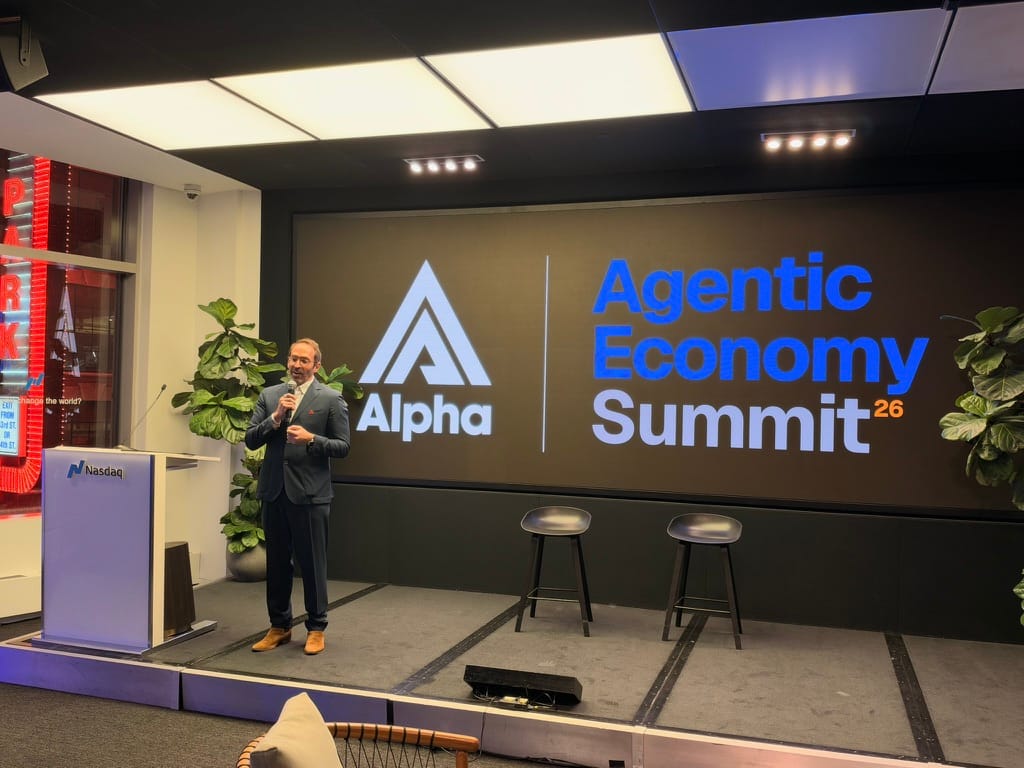
We continued that evening with our Alpha Council reception on the second floor of Nasdaq where they film Fast Money. This was in partnership with Adobe, where Andrew Warden, Global Vice President of Marketing at Adobe, shared the challenges and opportunities for brands to be discovered in the agentic economy.
The intersection of AI, creativity, marketing and enterprise transformation offers a fascinating window into how quickly traditional business models are evolving.
As intelligence becomes more accessible, the competitive advantage increasingly shifts toward how organizations apply it, differentiate themselves and earn trust.
The evening also reinforced something fundamental about the Alpha Council: the value of bringing exceptional leaders together to learn from one another in an environment of curiosity, candor and mutual respect.
01. The State of the Agentic Economy
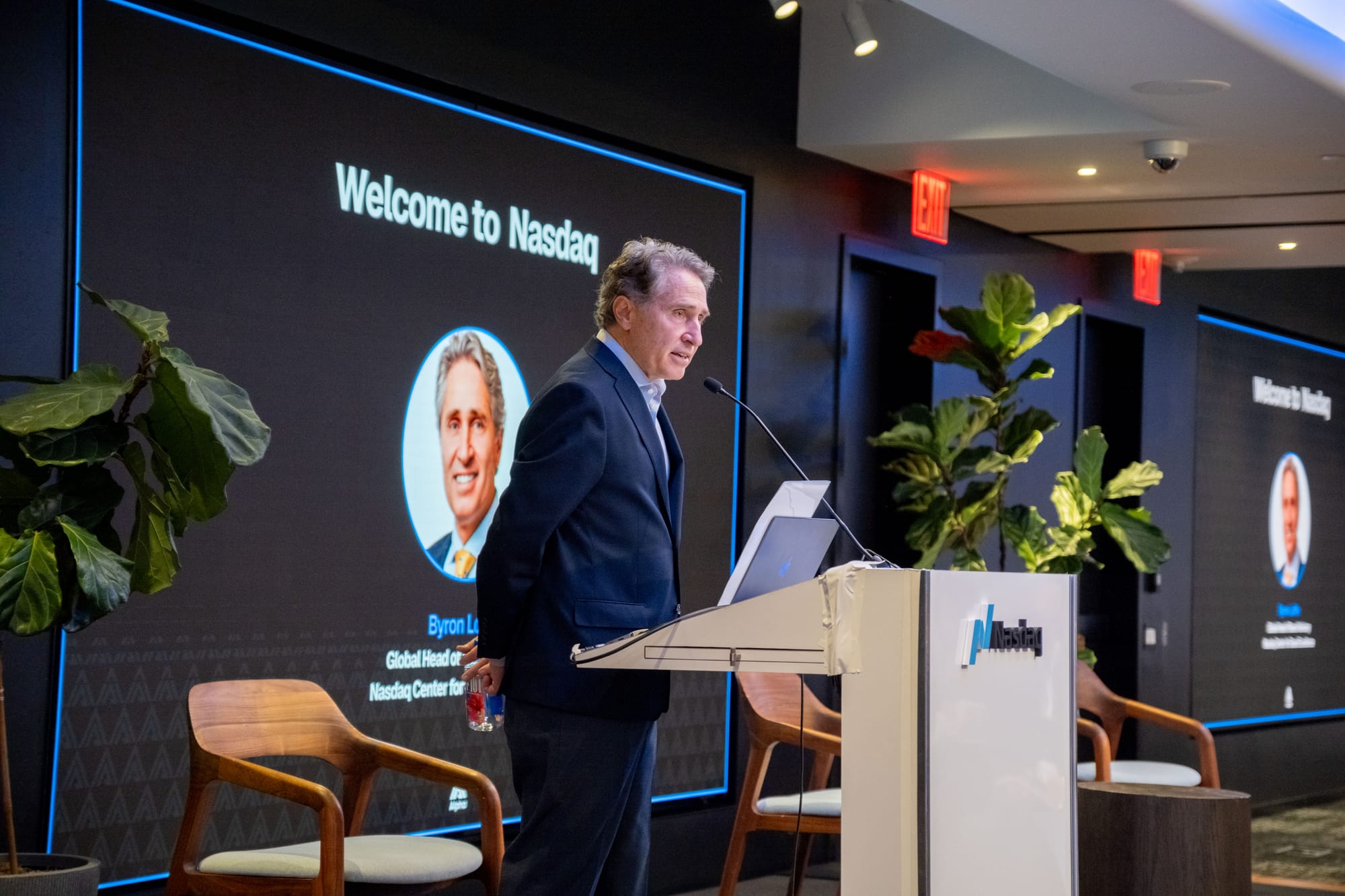
Opening remarks: Byron Loflin | Keynote: Steven Wolfe Pereira
I opened the Summit with a conviction that has become central to our work at Alpha: every enterprise will become an agentic enterprise.
We are moving from software that people operate to intelligent systems that can reason, orchestrate workflows, make decisions and take action on our behalf.
The implications extend far beyond productivity. They will reshape organizational structures, competitive dynamics, customer relationships, capital allocation and the nature of corporate accountability.
The economy itself will increasingly include interactions between humans and agents, businesses and agents, and agents transacting with other agents.
For boards, the fundamental question is no longer simply whether their companies are adopting AI. It is whether their companies are prepared to operate and compete in an economy increasingly mediated by autonomous intelligence.
02. The Agentic Enterprise Transformation
Al Zollar, Don Beery and moderator Ed Dandridge
Enterprise transformation in the agentic era requires far more than deploying copilots or purchasing AI software.
It requires rethinking how an organization operates: its workflows, decision rights, technology architecture, talent, incentives and accountability.
Companies must determine which activities should be automated, which decisions can be delegated and which responsibilities must remain with humans.
The distinction between implementing AI and becoming an AI-native enterprise will increasingly separate companies that achieve incremental efficiencies from those that fundamentally transform their economics.
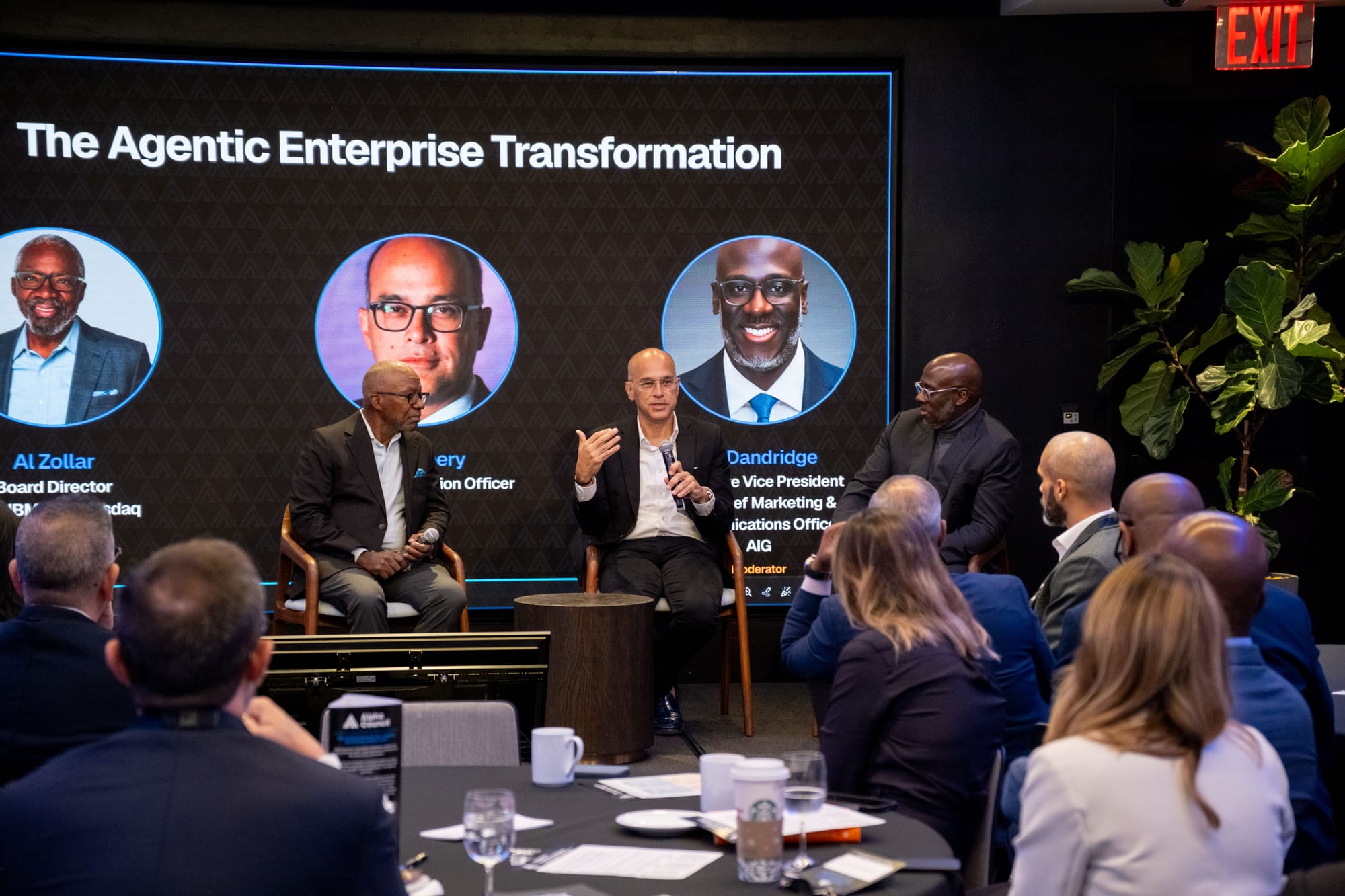
The boardroom question: Is management pursuing isolated AI initiatives, or redesigning the enterprise for an agentic future?
03. The Future of Agentic Brands
Mark Howard, Jonah Goodhart, Christine Gambino and moderator Kathy Leake
What happens when your next customer is an AI agent?
For decades, companies have invested in understanding how humans discover, evaluate and purchase products. We must now prepare for a world where agents increasingly perform those activities on their behalf.
The emergence of business-to-agent commerce, or B2A, could fundamentally change marketing, advertising, search, distribution and customer acquisition.
Companies will need to serve two audiences: humans and machines. Their products, services, policies, reputations and value propositions must become discoverable and understandable to both.
Brand trust will remain essential, but it will increasingly need to be supported by structured, verifiable evidence.
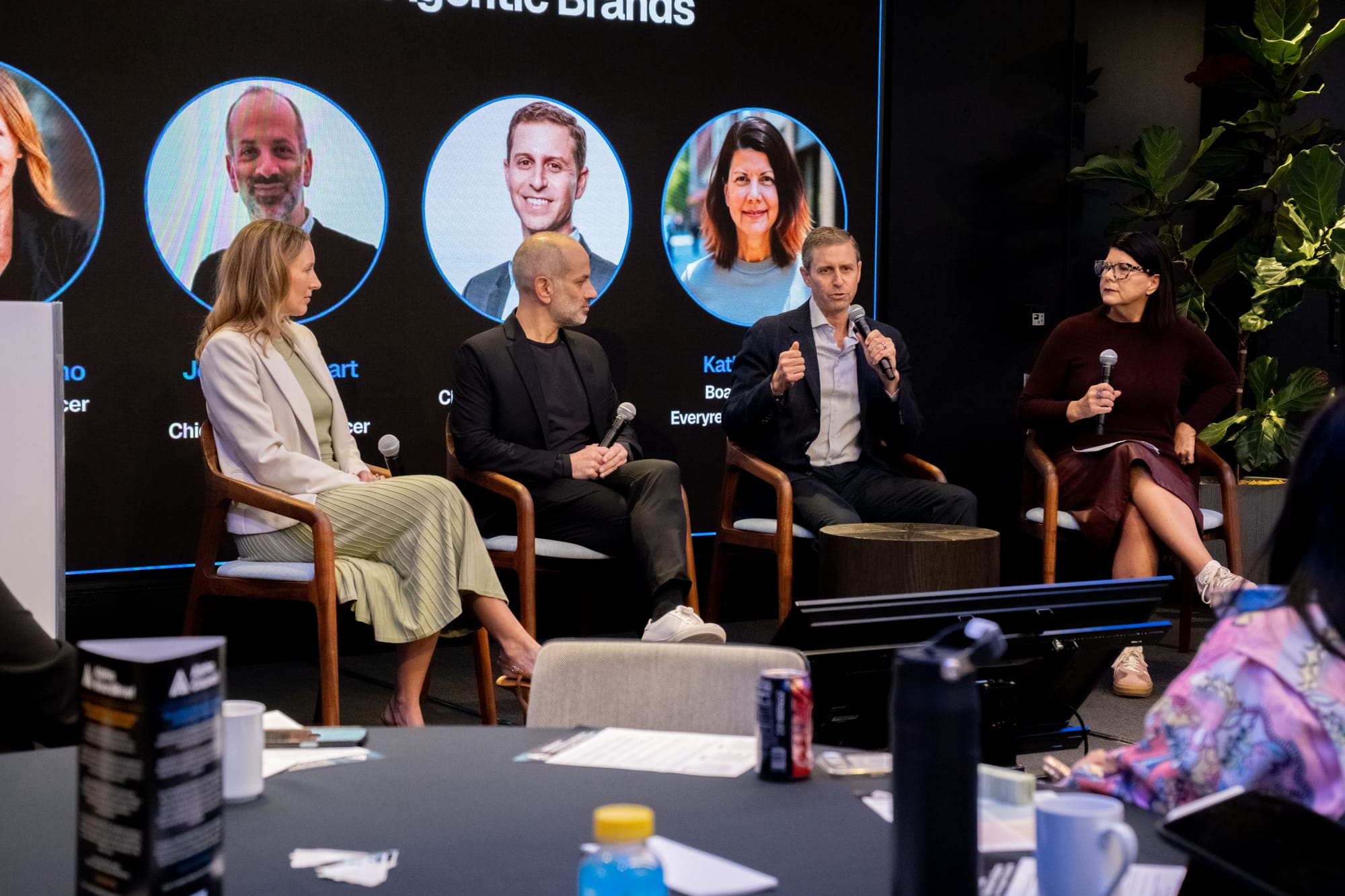
The boardroom question: How discoverable, understandable and trustworthy is our company to AI agents?
04. Agents, Crypto and the Future of Finance
Mayur Gupta and moderator Sonita Lontoh
The emergence of autonomous economic actors raises profound questions about the future of financial infrastructure.
Agents will increasingly need the ability to transact, make payments, procure services and manage financial workflows within defined limits.
Digital assets, programmable money and emerging payment protocols could become important components of this economy.
But financial autonomy also introduces new risks. Who authorizes an agent to spend money? How is its identity verified? Who is liable when a transaction goes wrong?
The future of agentic finance requires innovation in both financial infrastructure and governance.
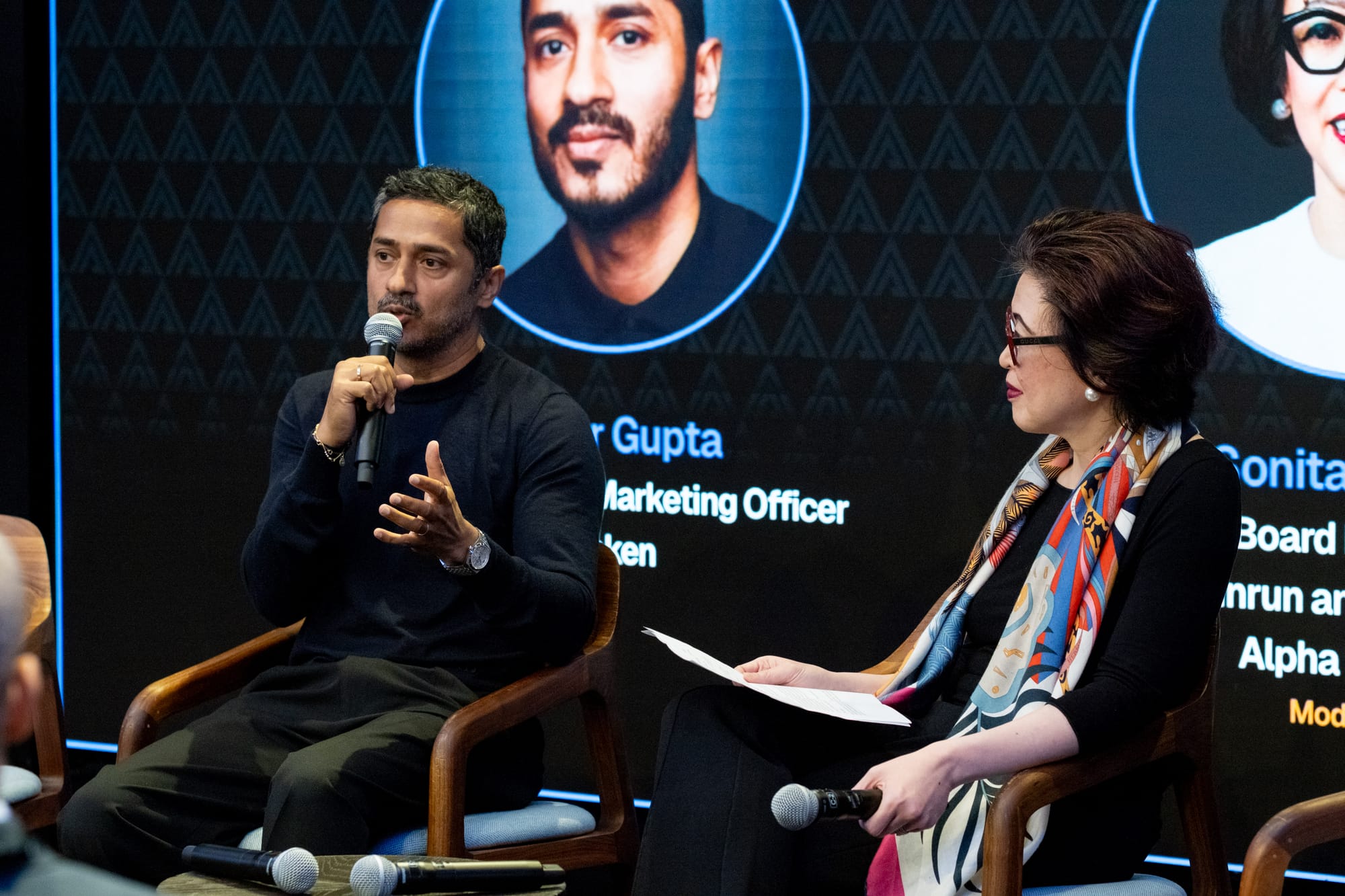
The boardroom question: What financial authority are we prepared to delegate to autonomous systems, and how will we control it?
05. What Happens to People When AI Frees Us Up?
Gina Bianchini in conversation with Steven Wolfe Pereira
So much of the AI conversation focuses on what machines will do. We must spend equally meaningful time considering what humans will do.
If AI gives us back time, what will we choose to do with it?
Human connection, creativity, curiosity, judgment, belonging and purpose could become increasingly valuable in a world where many routine intellectual tasks are automated.
Productivity is not an end in itself. The greater opportunity is to use technology to expand human potential and create more meaningful experiences.
I believe the most successful organizations will be those that understand how to combine abundant machine intelligence with distinctly human capabilities.
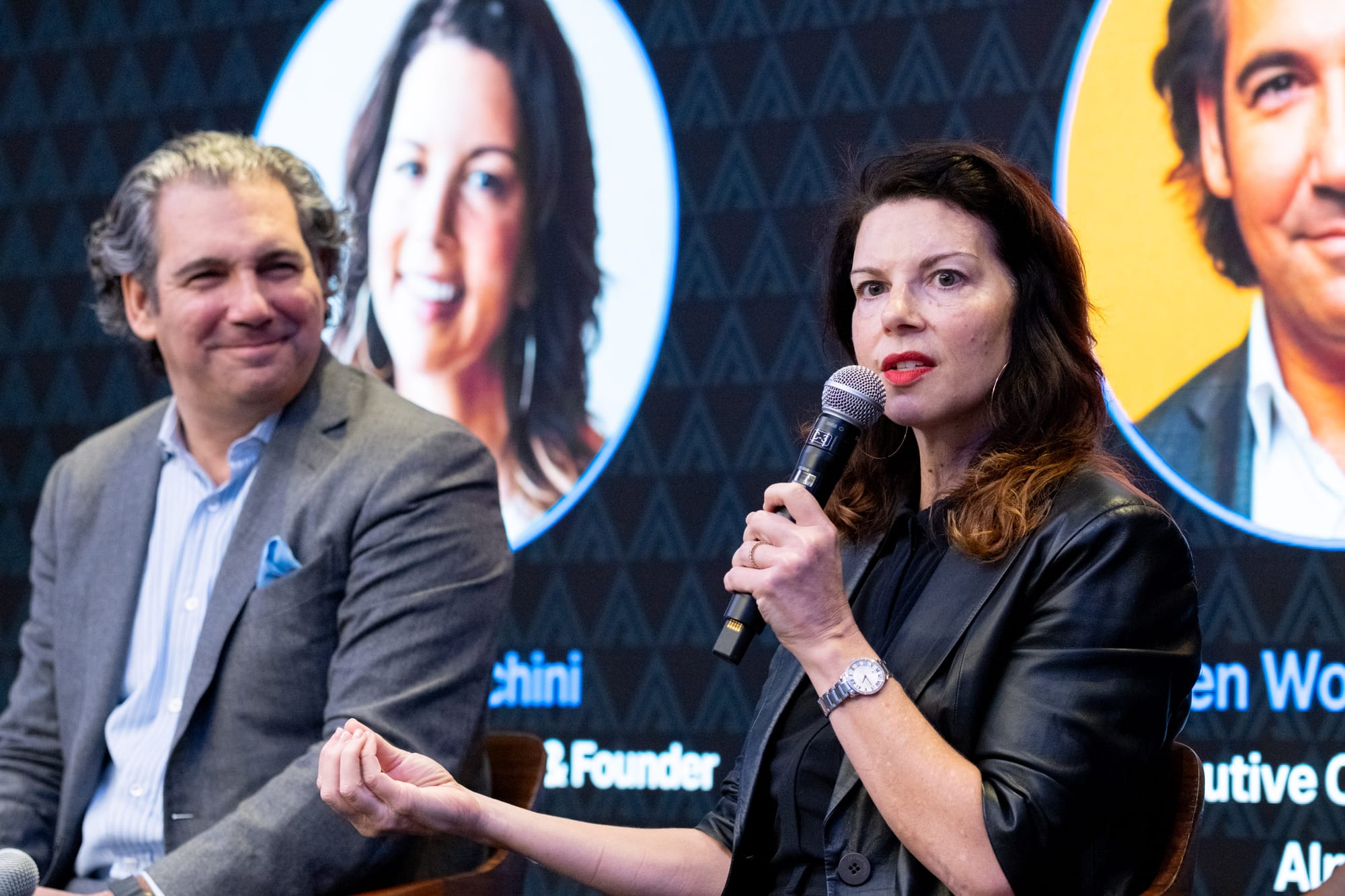
The boardroom question: What is our strategy for human potential in the age of abundant intelligence?
06. The Board POV
Laura Desmond and moderator Kenna Baudin
AI is simultaneously a strategic growth opportunity, an operational transformation and an emerging enterprise risk.
That makes it an issue for the entire board—not simply the technology committee or audit committee.
Directors must develop sufficient AI fluency to challenge management's assumptions, assess capital allocation, understand competitive threats and evaluate the organization's preparedness.
We cannot govern what we do not understand.
Board education must evolve from occasional technology briefings to an ongoing discipline of continuous learning.
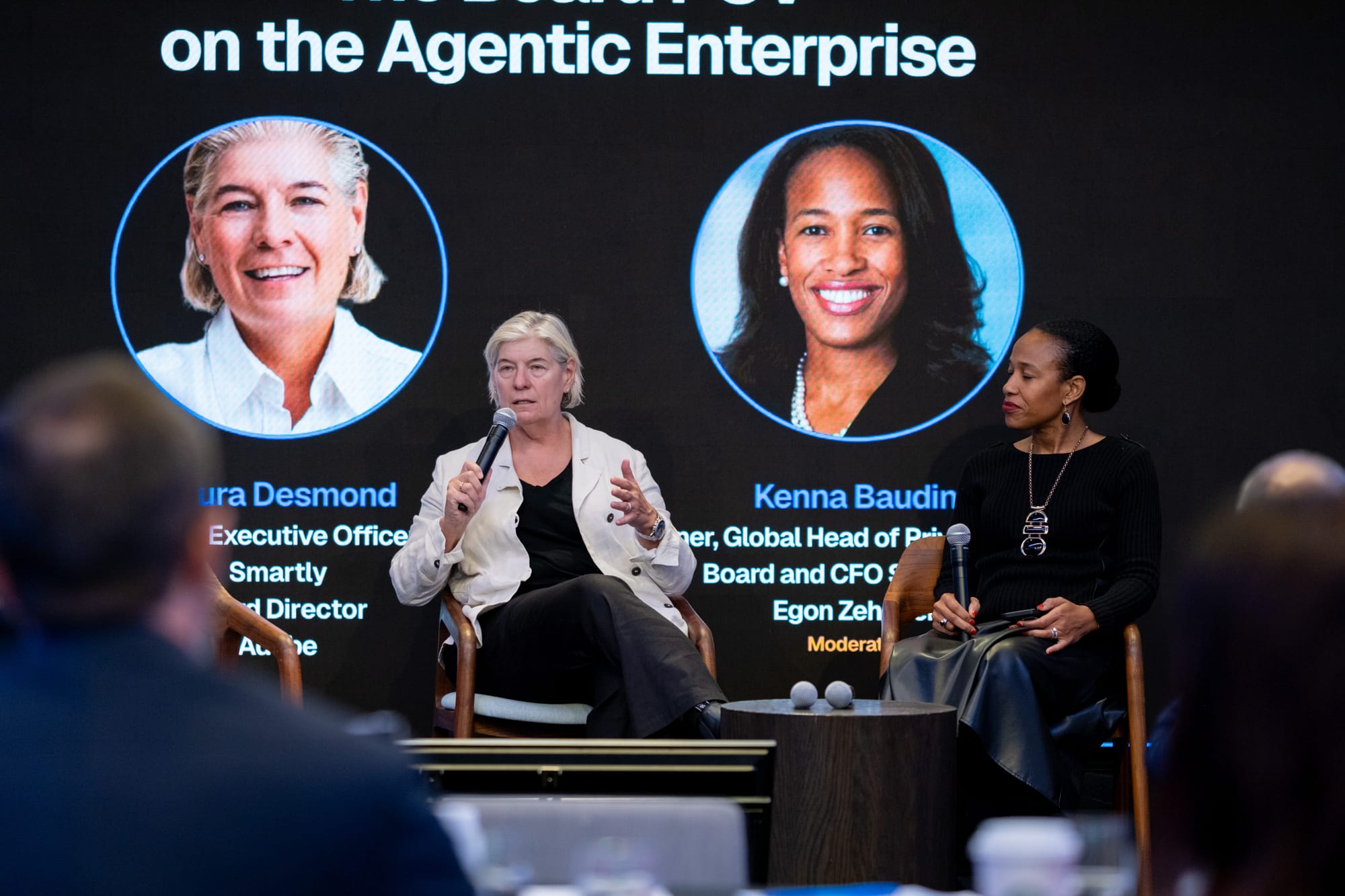
The boardroom question: Are directors developing the knowledge and capabilities required to govern an increasingly autonomous enterprise?
07. The Future of Agentic AI
Gary Vaynerchuk, Sarah Hofstetter and moderator Alvin Bowles
Technology changes rapidly. Human behavior, attention and relationships remain central to business success.
As AI dramatically reduces the cost of creating content, software and personalized experiences, companies will need to reconsider what makes them distinctive.
When intelligence and content become abundant, scarcity shifts elsewhere—to trust, relevance, authenticity, relationships and attention.
The companies that thrive will not necessarily be those using the most AI. They will be those that understand how to apply AI to create differentiated value for the people they serve.
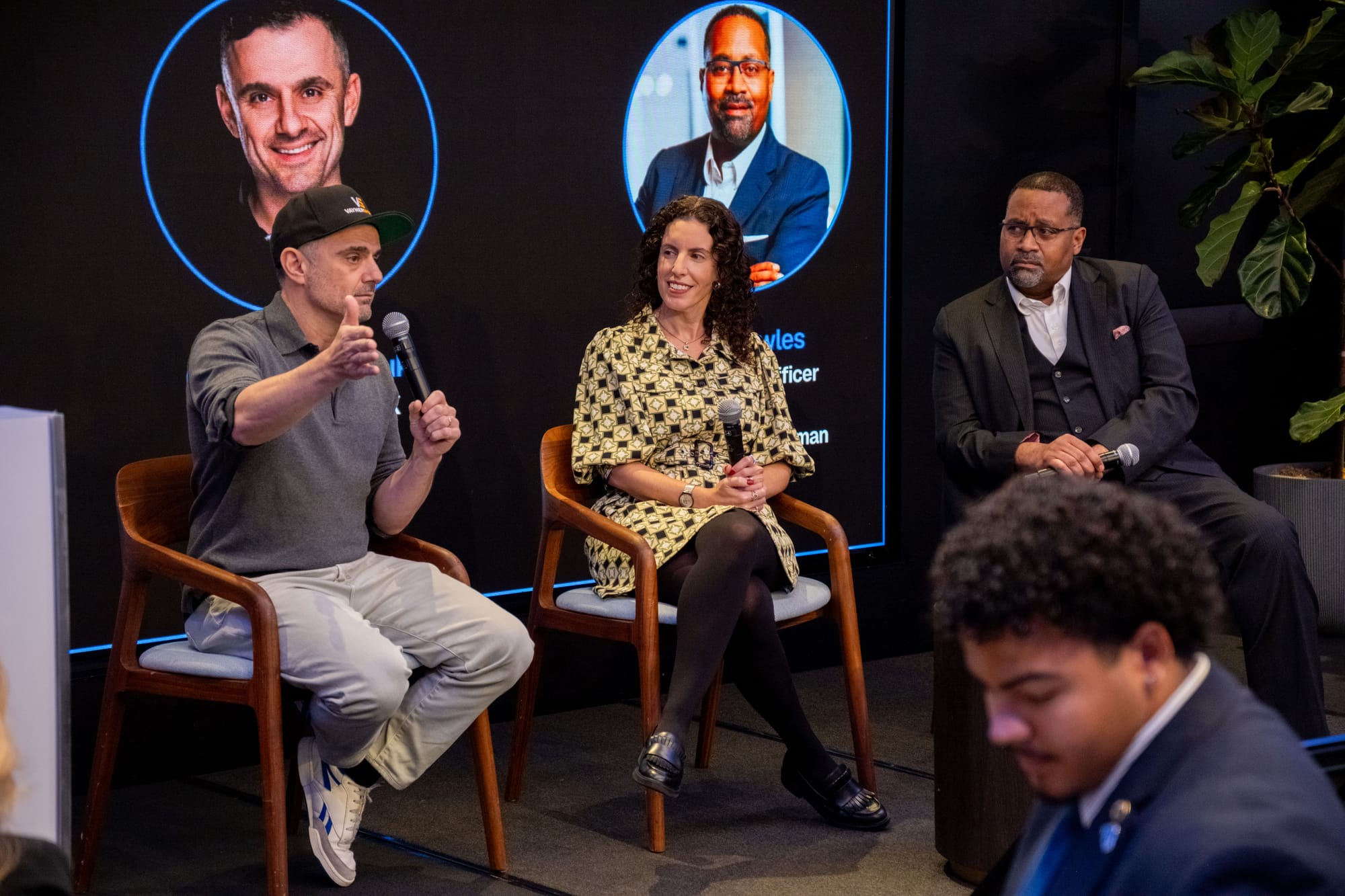
The boardroom question: As AI makes more capabilities universally accessible, what becomes our sustainable competitive advantage?
08. Where Investors See the AI Puck Going
Stacy Brown-Philpot, Ann Miura-Ko and moderator Karen Page
The agentic economy is creating an extraordinary reallocation of capital across infrastructure, frontier models, applications and entirely new categories of businesses.
Yet technological capability does not automatically translate into durable enterprise value.
Investors must distinguish between temporary advantages and defensible businesses, between rapid adoption and sustainable economics, and between compelling demonstrations and genuine customer value.
For established enterprises, these same considerations should inform their AI investment strategies.
The ability to experiment rapidly, learn continuously and allocate capital intelligently will become increasingly important.
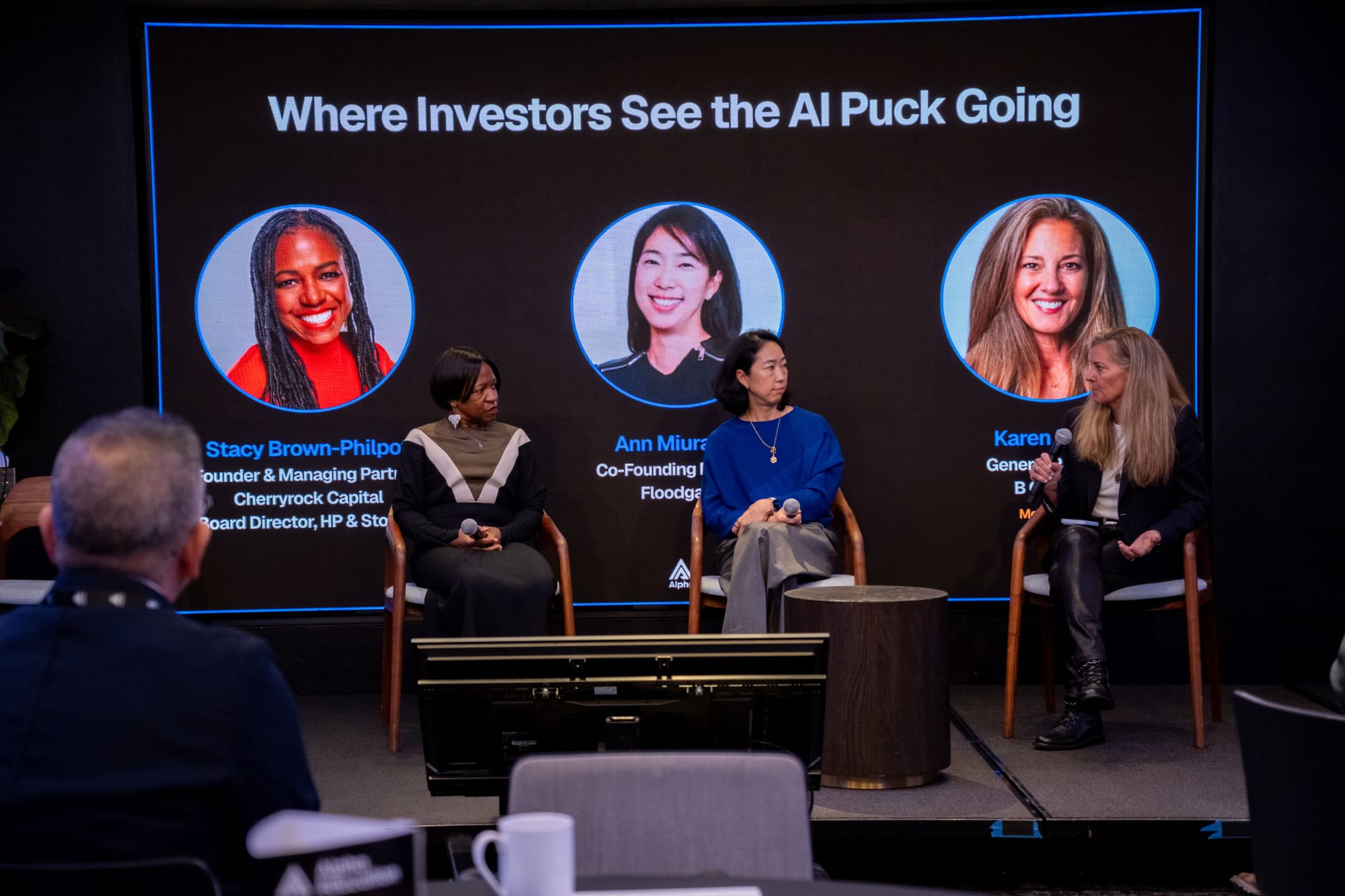
The boardroom question: Where in the emerging AI value chain can our company create and capture enduring value?
09. The Agentic Society
Andrew Yang and moderator Aaron Cooper
The consequences of AI extend well beyond corporate earnings and enterprise productivity.
AI will influence labor markets, education, economic mobility, public policy and the distribution of wealth and opportunity.
As autonomous systems become more capable, society will need to confront difficult questions about how economic value is created, who participates in that value and how institutions adapt.
Corporate leaders have a responsibility to think beyond the immediate financial implications of AI deployment.
The future of work is also a question about the future of society.
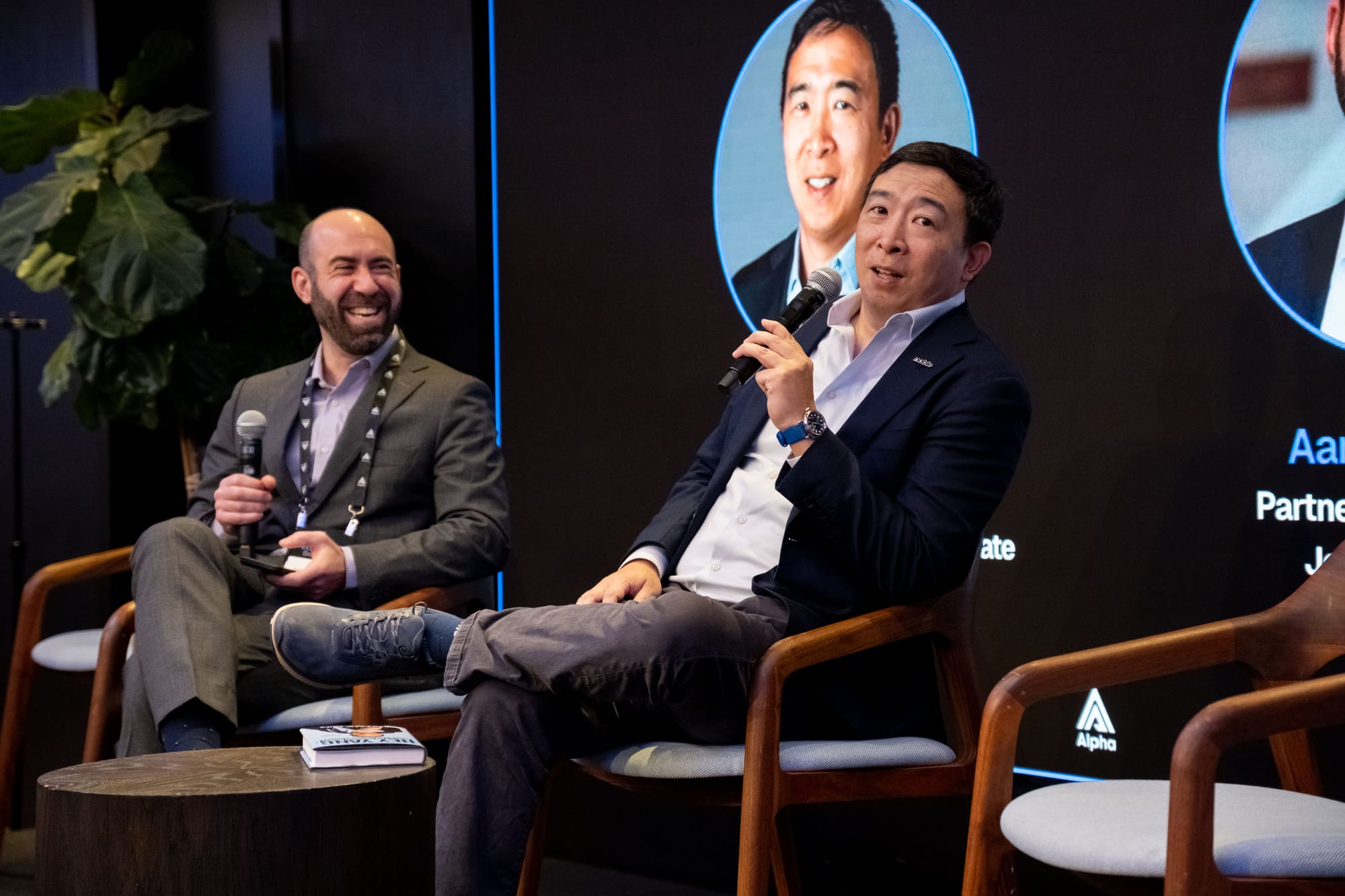
The boardroom question: How are we preparing our workforce and stakeholders for the broader socioeconomic consequences of AI?
10. AI Governance: The Boardroom Perspective
David Eun, Shiv Singh and moderator Navrina Singh
Traditional governance mechanisms were designed for organizations operating primarily at human speed.
Agentic enterprises will increasingly operate at machine speed.
Quarterly reporting, periodic assessments and static policies will remain important, but they will not be sufficient on their own.
Boards need visibility into where AI is deployed, what authority has been delegated, how risks are monitored and whether controls are functioning as intended.
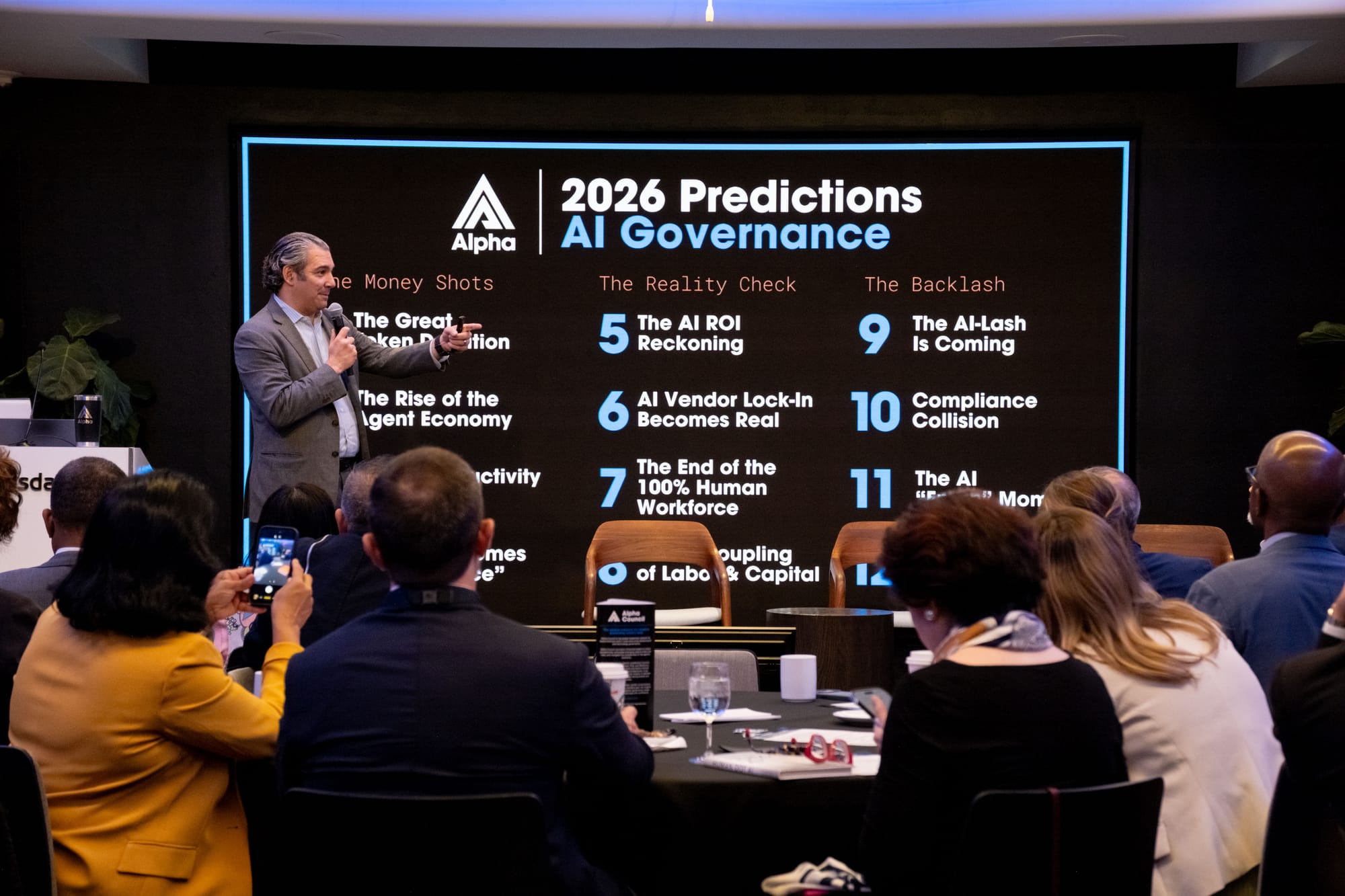
This is why we believe the next evolution of corporate governance must be continuous governance.
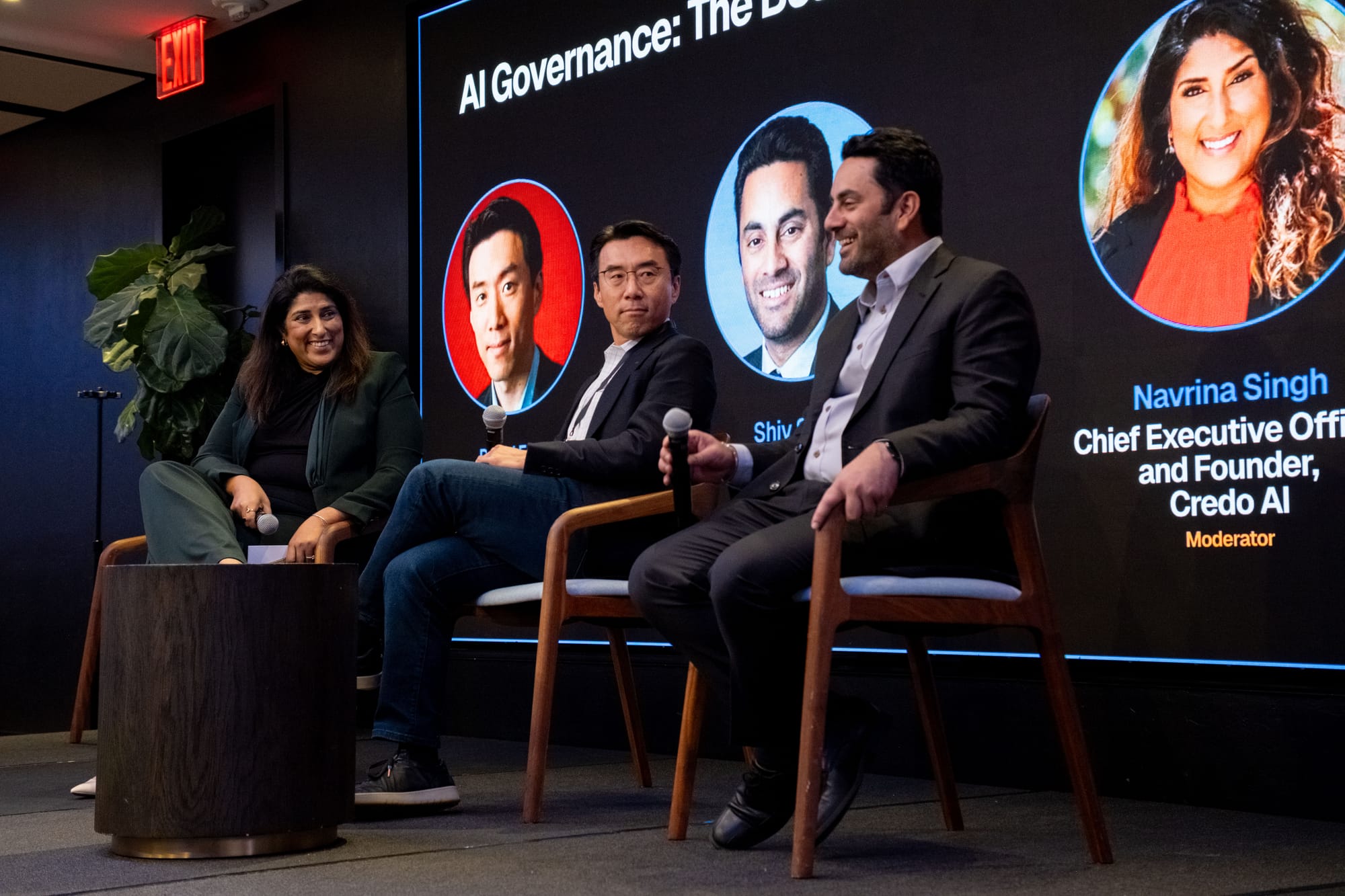
The boardroom question: How can we demonstrate that our AI governance is effective between board meetings, not simply at them?
11. Governance in the Agentic Economy
Danny Manimbo, Hensey Fenton and moderator Bri Treece
The emerging AI assurance ecosystem is becoming increasingly important as enterprises move from experimentation to autonomous deployment.
Policies and principles must translate into measurable controls, verifiable evidence and independent evaluations.
Boards, investors, insurers, customers and regulators will increasingly need confidence not just in what companies say about their AI governance, but in what they can demonstrate.
At Alpha, we believe evaluations will become a foundational component of this assurance ecosystem.
Evals are the new audits. They provide a mechanism for testing whether intelligent systems operate within their intended boundaries and produce evidence that can be independently examined.
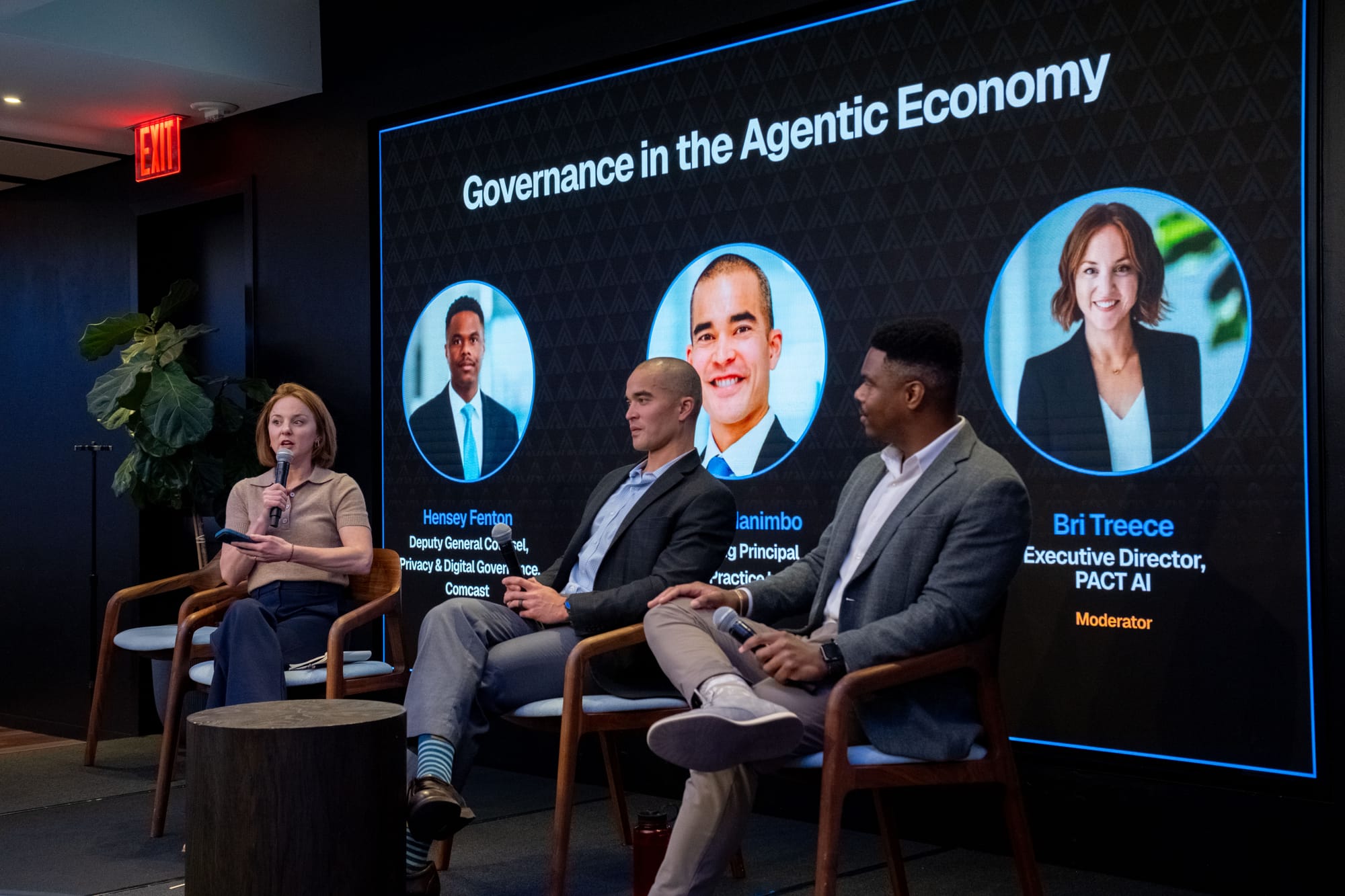
The boardroom question: What independent evidence do we have that our AI controls actually work?
12. Thinking Inside the Box
David Epstein and moderator Tami Rosen
One of the most compelling ideas in David Epstein's book, Inside the Box: How Constraints Make Us Better, is the productive relationship between constraints and creativity.
This has profound implications for AI governance.
Governance should not be viewed as an obstacle to innovation. Thoughtfully designed constraints can enable organizations to innovate with greater confidence.
Clear boundaries, defined permissions, appropriate safeguards and meaningful accountability can create the conditions for responsible experimentation.
This is the essence of governance by design.
Scaling laws need governance laws.
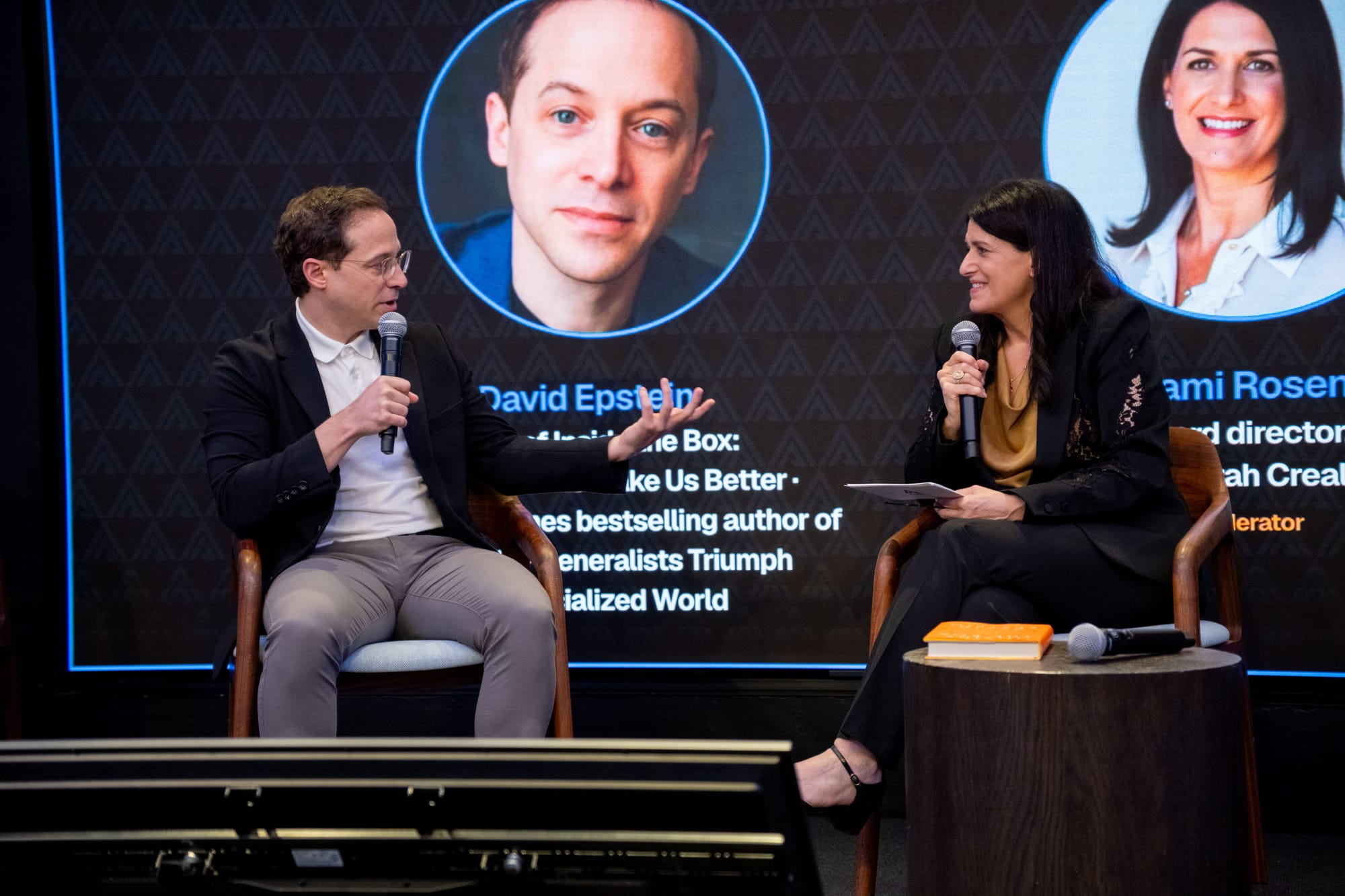
The boardroom question: How can we design constraints that enable innovation rather than simply restrict it?
13. Owning Your Ontology: Why Knowledge Graphs Are Key
Philip Rathle
One of the most important - and least understood - strategic assets in the agentic enterprise is its ontology.
An ontology defines how an organization understands its information, entities, relationships and operating context. Knowledge graphs help make those relationships accessible to intelligent systems.
As foundation models become increasingly capable and interchangeable, proprietary organizational knowledge and context could become critical sources of differentiation.
Agents need more than access to data. They need to understand what that data means, how it relates to other information and which sources are authoritative.
Every enterprise should consider how it develops, maintains and governs its own institutional intelligence.
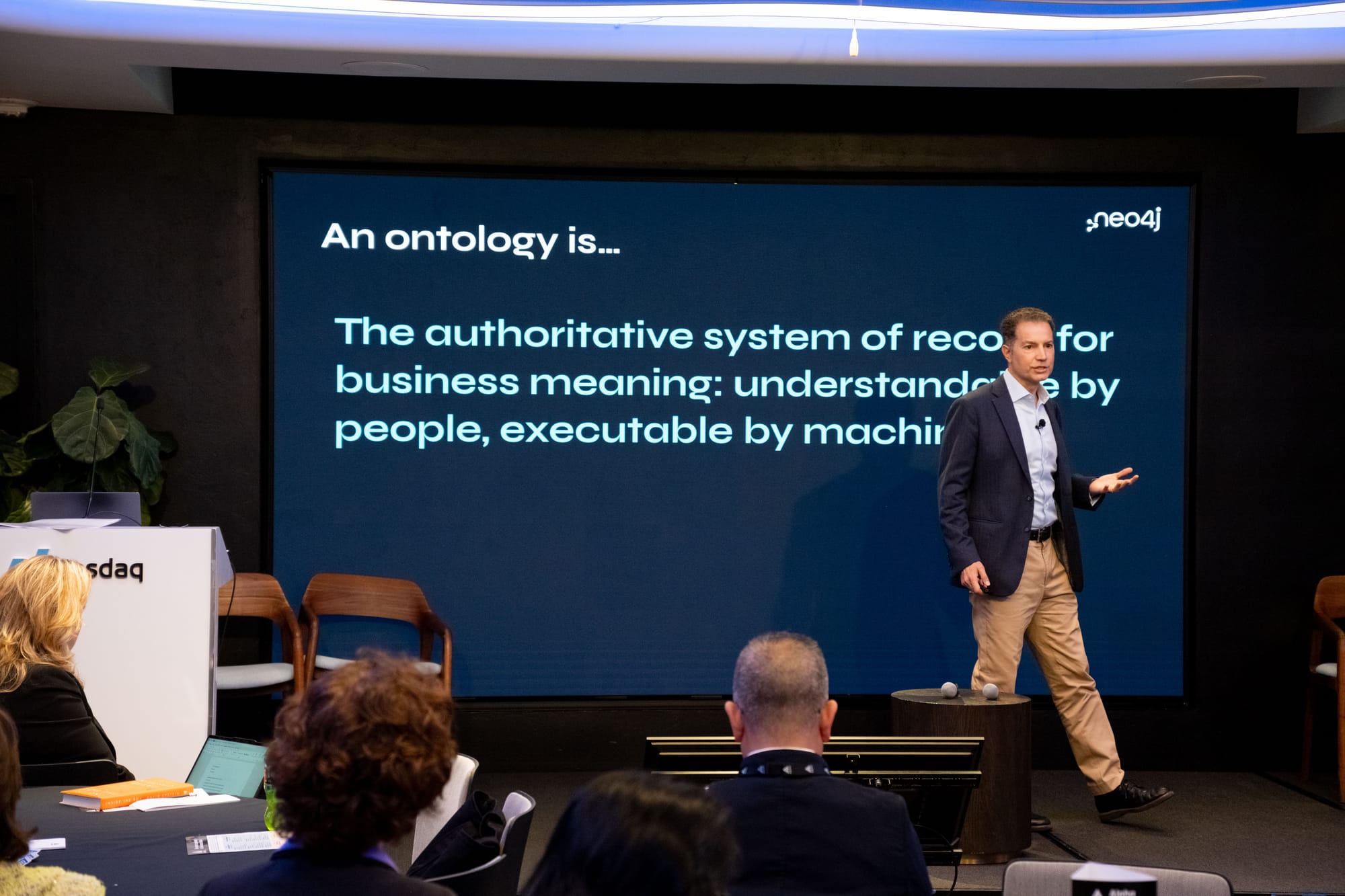
The boardroom question: Do we own the knowledge and context that power our AI, or are we becoming dependent on someone else's intelligence?
14. The Future of Cybersecurity
Wasim Khaled, Omar Khawaja, Mahendra Ramsinghani and moderator Shannon Nash
AI is transforming both the offensive and defensive dimensions of cybersecurity.
Autonomous agents introduce new attack surfaces, identities, permissions and potential vulnerabilities. They also create opportunities for more intelligent detection, response and remediation.
Traditional cybersecurity approaches must evolve to address nonhuman identities, manipulation of AI systems, information integrity and the risks associated with interconnected autonomous workflows.
Security can no longer be treated as something applied after an AI system has been deployed.
Security, privacy and governance must be embedded into the architecture from the beginning.
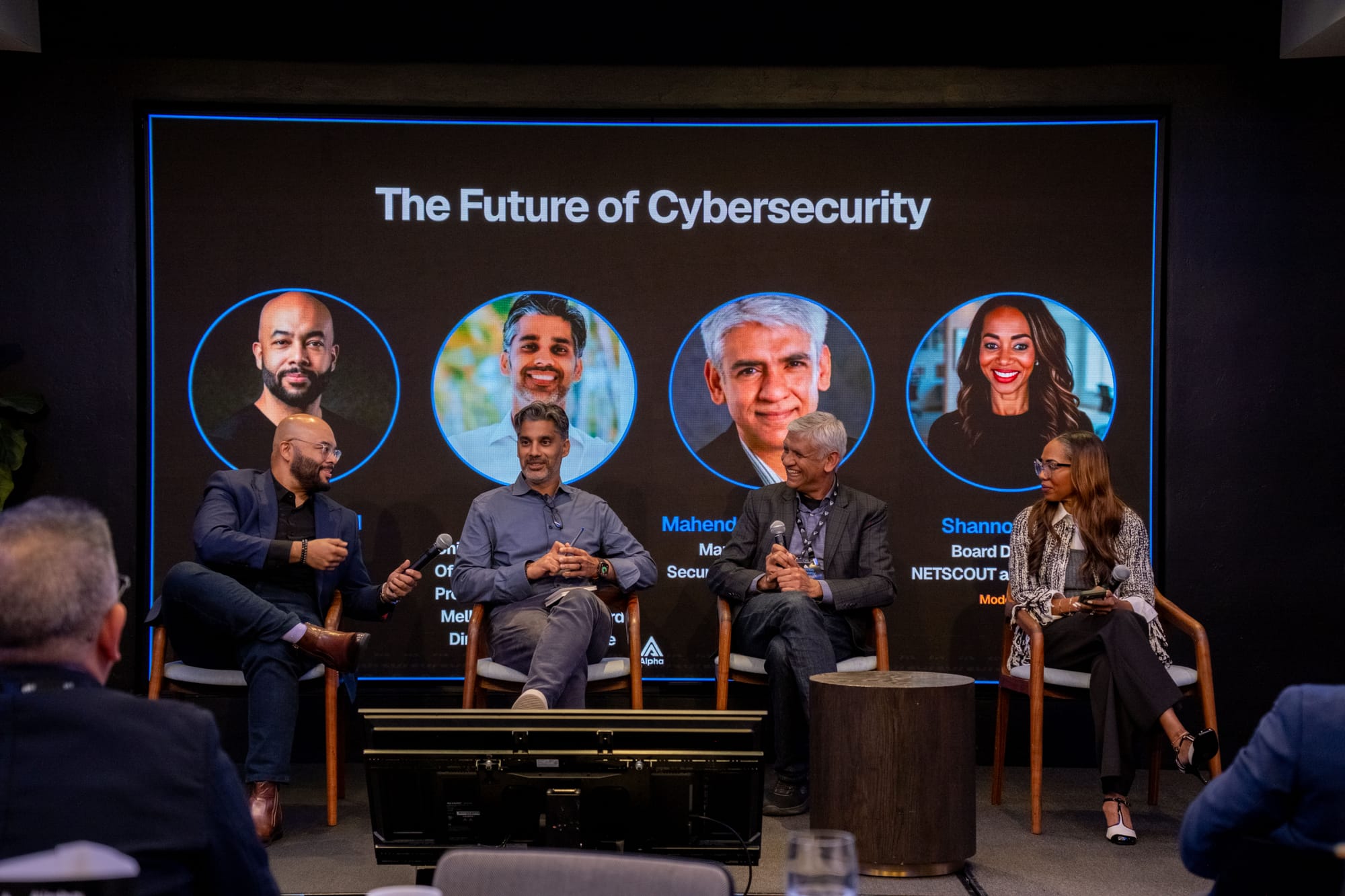
The boardroom question: Is our cybersecurity strategy designed for a world in which both attackers and defenders increasingly operate autonomously?
15. The Role of Trust
Eric W. Muhlheim
As agents become intermediaries between people, businesses and information, trust becomes an essential component of digital infrastructure.
When an agent searches, recommends, purchases or acts on someone's behalf, the person delegating that responsibility must have confidence that their interests are being protected.
This creates new questions about privacy, transparency, incentives, identity and accountability.
The agentic web must evolve in ways that preserve user autonomy and make trustworthy interactions possible.
Trust cannot simply be asserted. It must be earned, demonstrated and maintained.
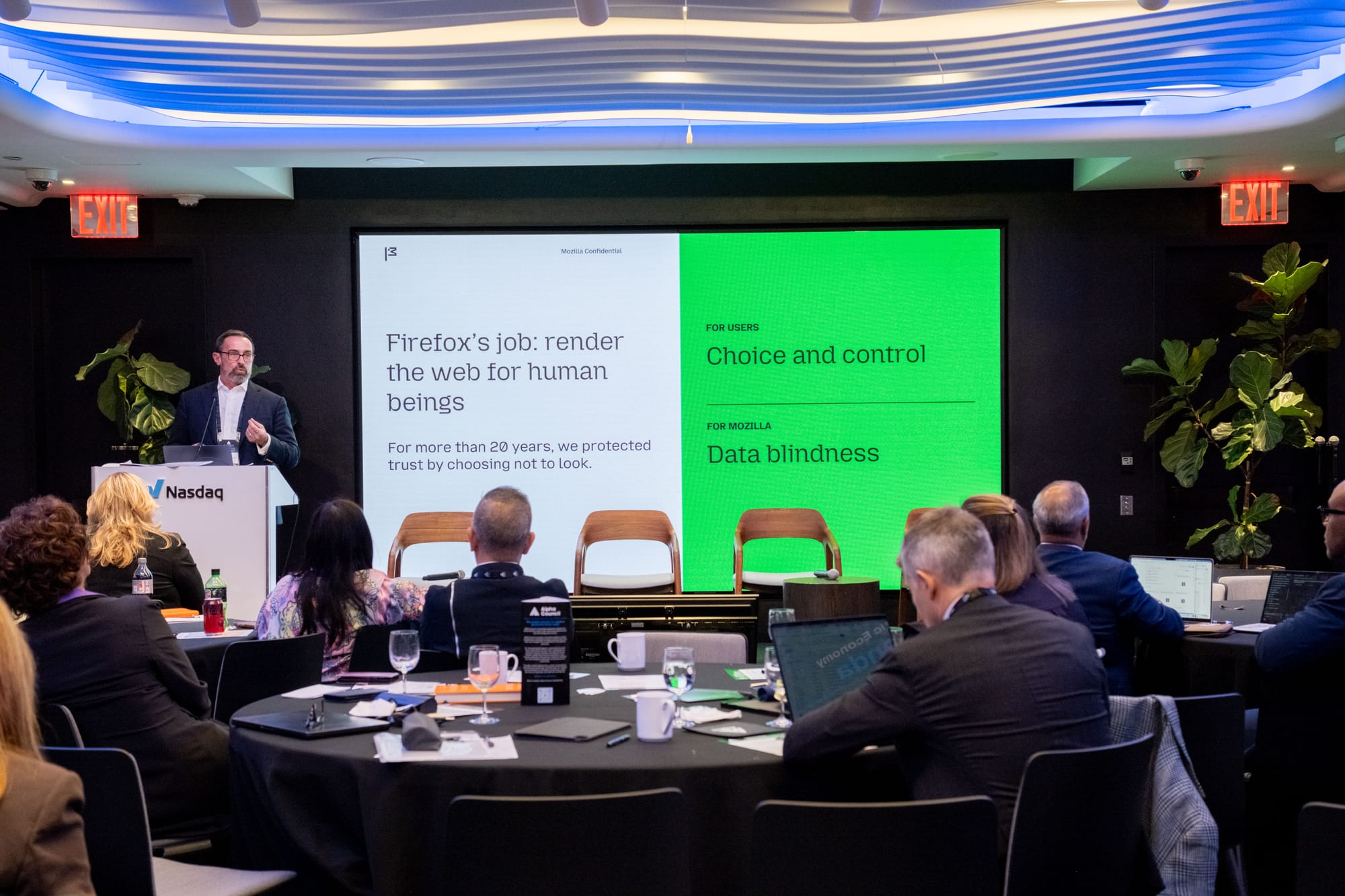
The boardroom question: How do we ensure that our AI systems act in the interests of the people who entrust them with authority?
16. Applying AI to Products
Roberta “Bertie” Thomson
AI is not simply a tool for improving internal operations. It is becoming an integral component of products, services and customer experiences.
For product leaders, the opportunity is to imagine experiences that were previously impossible: adaptive, personalized, interactive and increasingly intelligent.
However, embedding AI into products also introduces important questions about intellectual property, safety, customer trust and the behavior of intelligent systems.
The product development process itself must incorporate governance by design.
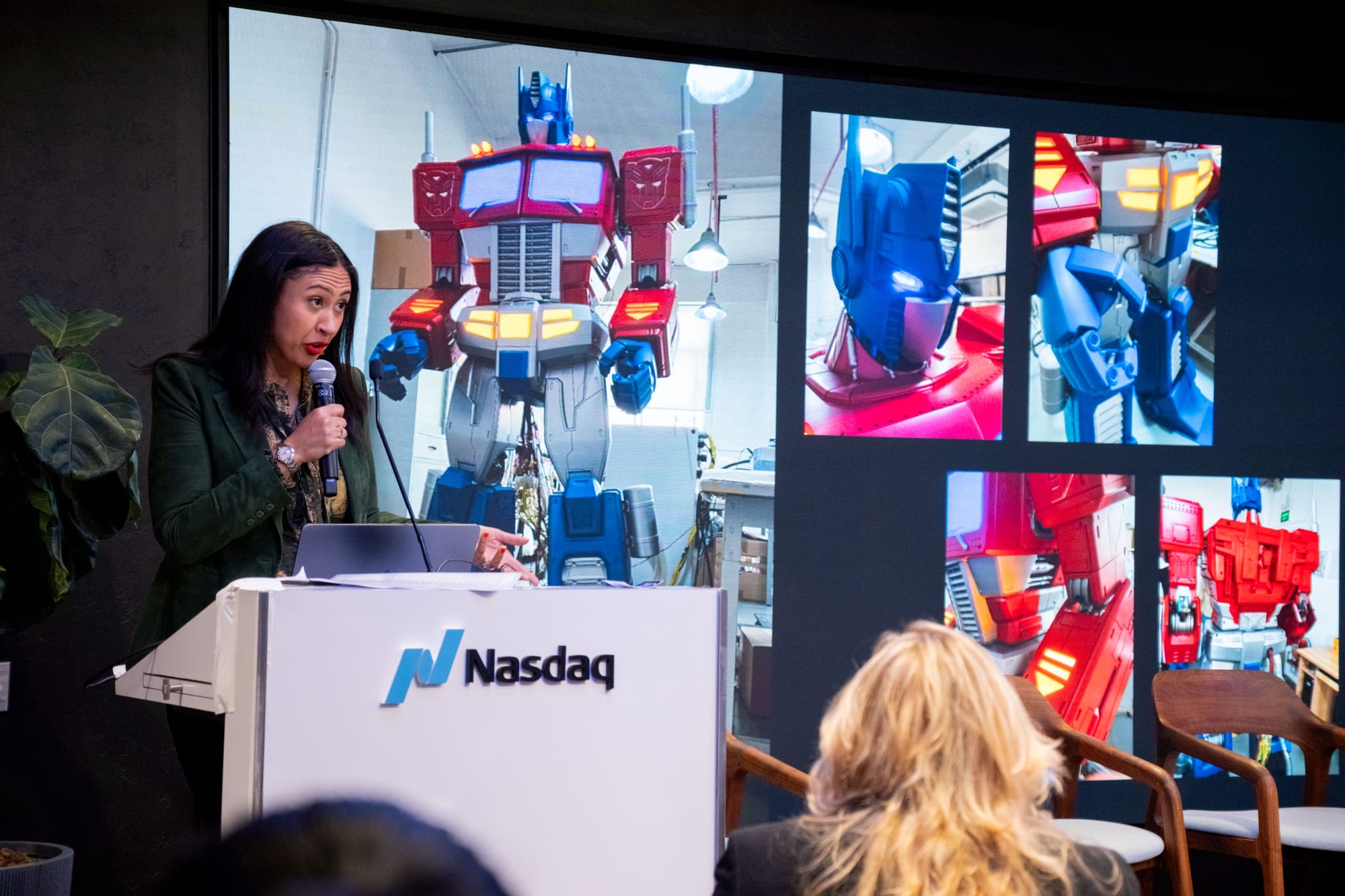
The boardroom question: Are we using AI to improve existing products, or to create entirely new sources of customer value?
17. How to Understand ROI in the Agentic Enterprise
Adam Schwartz
One of the most persistent challenges for boards and executives is understanding the actual return on AI investments.
Measuring adoption, licenses purchased, prompts generated or estimated hours saved is not enough.
Organizations must connect AI deployment to meaningful business outcomes: revenue growth, operating margins, customer satisfaction, productivity, quality, risk reduction and enterprise value.
As AI becomes more autonomous, measurement must also account for reliability, exceptions, oversight and the cost of errors.
AI investment decisions should be informed by evidence rather than enthusiasm.
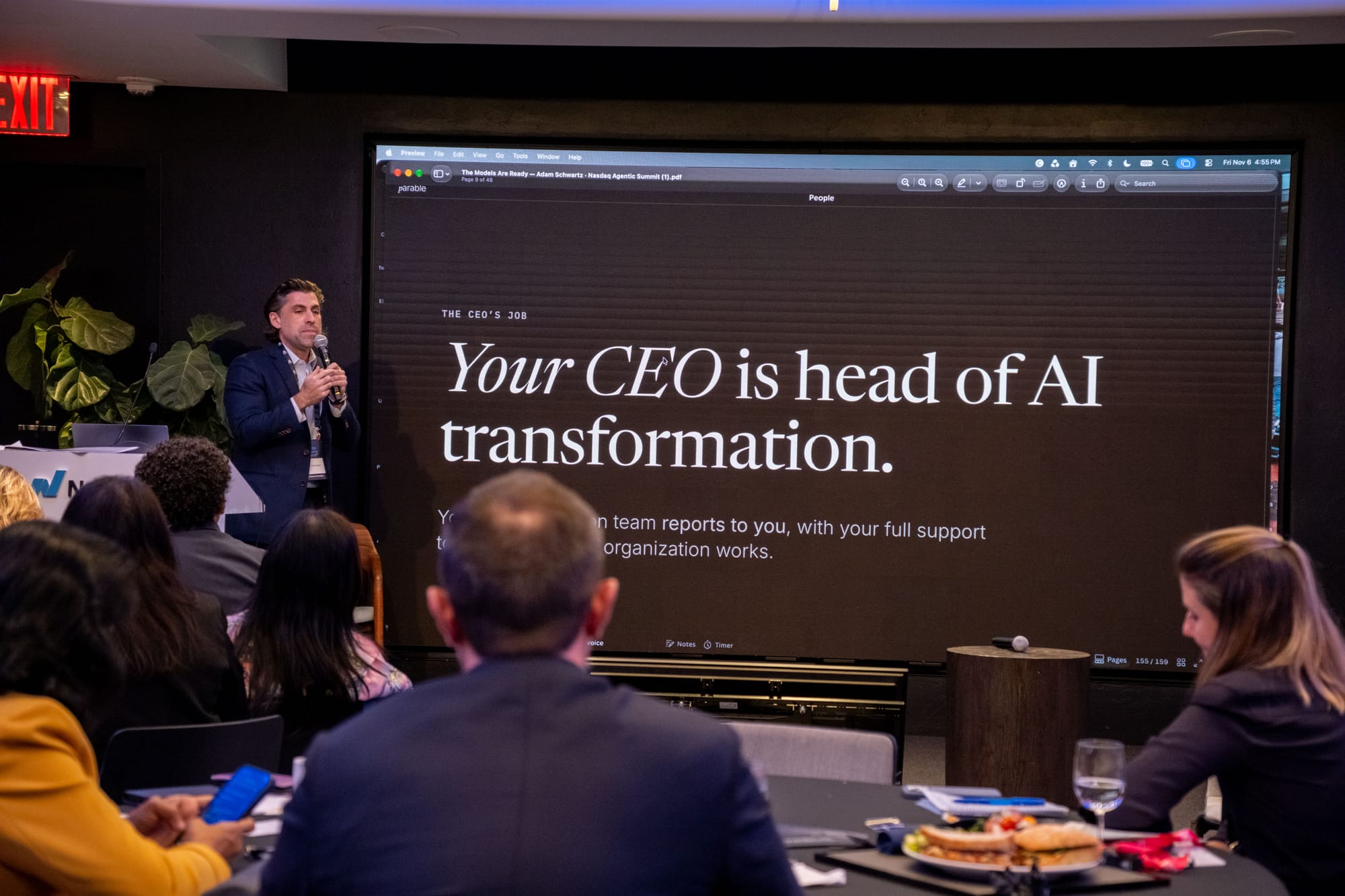
The boardroom question: Can management demonstrate how our AI investments are translating into measurable and sustainable enterprise value?
18. The Future of the Agentic Enterprise
Dr. Peter Day, Madhu Muthukumar and moderator Steven Wolfe Pereira
We concluded the Summit by looking ahead at what enterprises may become as AI continues to advance.
The emerging possibilities include organizations orchestrated by intelligent systems, increasingly dynamic software, autonomous workflows, continuous learning and new forms of collaboration between humans and agents.
We must prepare for an environment in which the pace of technological change increasingly exceeds the traditional pace of organizational change.
The challenge will be to develop enterprises that are not only intelligent but adaptable, resilient, secure and accountable.
The future belongs to organizations that can learn and evolve continuously.
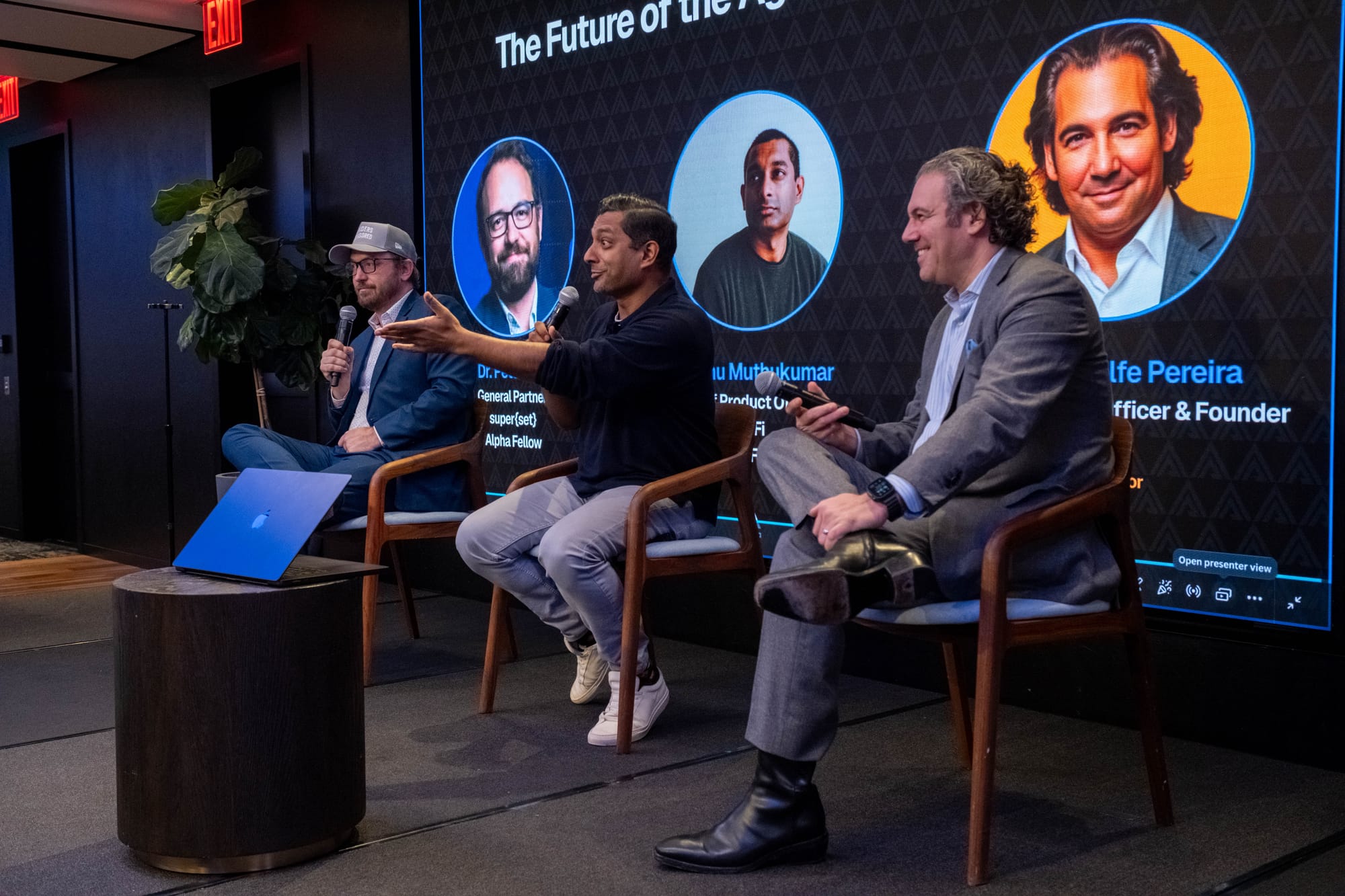
The boardroom question: Are we designing our enterprise for the capabilities AI has today, or for the capabilities it may have tomorrow?
Three Convictions Reinforced by the Summit
Across these conversations, three principles became even more central to how I think about governing the agentic enterprise.
Governance by Design
Purpose, authority, identity, permissions, constraints and accountability must be established before agents are empowered to act.
Governance must be embedded into how intelligent systems are designed, deployed and operated.
Humans Govern the Loop
We need to evolve beyond the conventional notion of humans in the loop.
As autonomous systems operate at machine scale, it becomes impractical to require human intervention in every decision.
Humans must instead govern the loop—establishing boundaries, monitoring outcomes, retaining accountability and possessing the authority to intervene when necessary.
Continuous Governance Requires Continuous Learning
AI systems, organizational risks and competitive environments are constantly evolving.
Governance must evolve with them through ongoing monitoring, independent evaluations, feedback and improvement.
The objective is not to slow innovation. It is to give organizations the confidence to pursue it responsibly.
Govern to grow.
Gratitude: The People Behind the Progress
On this Thanksgiving, I want to express my deepest gratitude to everyone who made the Alpha Agentic Economy Summit possible.
To our speakers and moderators: Thank you for sharing your expertise, perspectives, curiosity and time. Your willingness to help others understand this rapidly evolving landscape is invaluable. Each of you brought a distinctive lens to a transformation that no single discipline can fully comprehend.
To our attendees: Thank you for investing your time in learning, asking difficult questions, challenging assumptions and engaging with one another. Some of the most valuable learning happens in the conversations between sessions, over coffee, at lunch and in the relationships that continue long after an event concludes.
To our partners: Thank you for your collaboration, generosity and commitment to advancing this important work. We are especially grateful to Nasdaq and Adobe for helping bring these two days to life, and to all the organizations and individuals who supported the Summit.
To our Alpha Partners and Alpha Fellows: Thank you for your leadership, intellectual contributions and commitment to advancing the frontier of corporate governance. Your collective experience and expertise are instrumental in shaping Alpha's mission.
To our Alpha Council members: Thank you for believing in what we are creating together. The Alpha Council is more than a leadership network. It is a collective commitment to becoming better-informed, more capable and more responsible stewards of the organizations we serve.
To the Alpha team: Thank you for the countless hours, attention to detail and dedication required to bring our vision to life. I am particularly grateful to everyone who worked behind the scenes to make these two days possible.
And to our broader Alpha BoardBrief readership, thank you for joining us on this journey of continuous learning.
The Work Ahead
The Alpha Agentic Economy Summit was never intended to be simply another conference.
It is part of a continuing effort to advance our collective understanding of the agentic economy and develop the knowledge, frameworks, standards and governance intelligence necessary to lead it responsibly.
At Alpha, our mission is to set the global standard for continuous governance of the agentic enterprise, giving boards, investors and insurers decision-grade confidence in how AI is governed.
Through the Alpha Institute, Alpha Council, Alpha Intelligence and Alpha Evals, we are committed to helping leaders navigate this transformation with greater knowledge, evidence and confidence.
The opportunity before us is extraordinary. But so is the responsibility.
Technology will continue to advance. Intelligence will become increasingly abundant. Autonomous systems will become increasingly capable. The decisions we make today will influence how those capabilities serve businesses, people and society for generations to come.
In an age of abundant artificial intelligence, human wisdom, judgment, integrity and leadership may become our most important assets.
And for that, I am especially grateful.
Happy Thanksgiving to you and your families.
In good governance,
Steven


